
The name Wuhan became well-known around the world as a result of circumstances that nobody wished for. In the first months of 2020, the city in central China was frequently mentioned in international mass media due to its being the place of the beginning of the worldwide COVID-19 pandemic. For a while, Wuhan was associated exclusively with the images of vacated streets, lockdowns, hospitals, and uncertainty.
However, there is another side to Wuhan that is seldom captured by the media.
At present, the city is big and modern urban place with huge number of restaurants, historical sites, parks, public transport, shopping streets, and magnificent riverside skyline. There are millions of people living in Wuhan and it is known to be much more than just the location of the difficult history.
So, what is Wuhan like today? A trip around the city shows that it is surprisingly neat, organized, animated, and well-connected city.
A Taste of Wuhan in Hubu Alley
Hubu Alley is a famous walking street that consists of many vendors, shops, snacks, and specialties of the region. It offers a unique environment to explore everyday food items native to China rather than just tourist food.
Among the many food items available on the street, one must try doupi. The dish is basically rice, meat, and veggies rolled up in something like tofu skin. It may not look too fancy, but it turns out to be tasty and rather filling.
The rice is sticky, while the tofu skin contributes most of the taste. The filling of the dish can be made of pork or whichever ingredient it was made from.
For those looking for popular street food in Wuhan, doupi serves as a great start to experience eating in the city.
The servings are very cheap. It can cost you some yuans for a sample of several dishes.
Another thought-provoking feature of eating in Wuhan is the way payments happen. Mobile payments have been hugely woven into everyday life, and the traveler can usually pay by scanning a QR code. For someone used to cash or cards, seeing street food stylists make digital payments so simply can be surprising.
Walking Away from the Tourist Streets
Hubu Alley, in the end, gives way to simple residential buildings. This change of scenery offers a completely different sight of Wuhan.
Instead of tall buildings or tourist spots, there are marches of buildings, shops, drawings on the walls, parks, or peaceful streets. It gives an opportunity to see the way of life in the areas away from tourists.
What catches the attention is the condition of the streets. The city backs itself on street-cleaners doing their job everywhere while garbage is sorted into different categories, i.e., recyclable garbage, organic garbage, harmful garbage, or others.
Public parks hold a special place in the urban life. Old people can often be seen on parks spending their time playing games, exercising, communicating with their friends, or simply enjoying nature.
Wuhan might have a significant population of nearly 14 million people, but some central districts of this city can be surprisingly tranquil.
This contradiction is one of the things that makes life in Wuhan today so intriguing. A city of this size is usually expected to be quite the busy one. In some parts of the city, however, a feeling of peace and tranquillity can be felt.
What Does the Name Wuhan Mean?
The contemporary city of Wuhan has resulted due to the merging of three historically significant cities: Wuchang, Hankou, and Hanyang.
While the city is modern in its approach, parts of its past do remain significant today. No wonder the contemporary city is influenced by different ancient towns.
There are numerous historical sites and buildings in the city along with modern residential areas, shopping malls, and modern architecture.
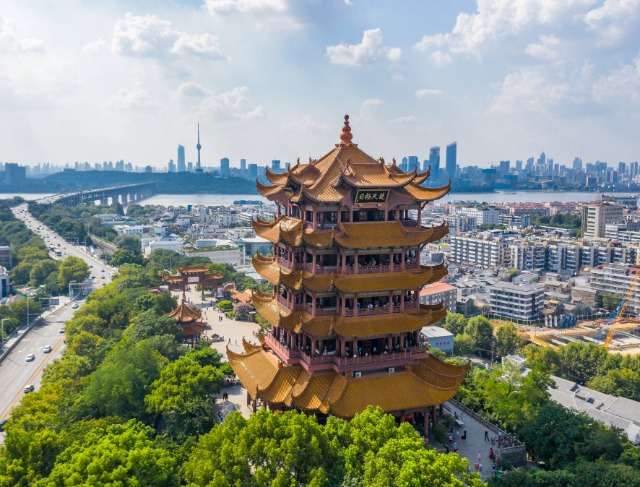
One of the most famous historic places that should not be missed while being in Wuhan is the Yellow Crane Tower.
The tower is most recognized as being associated with the city of Wuhan and has a long history behind it. Originally, it appeared during the Three Kingdoms period, usually dated back to 223 AD.
Regardless of this fact, the building that stands in the present day cannot be referred to as the exact same one built more than one thousand years ago. The tower has undergone modifications multiple times throughout its history due to wars, natural calamities, fires, and other destructions.
Aside from this, the historical importance of the tower is still breathtaking.
The area around is fairly large, and there are many avenues to wander around. People can walk around the territory, go upstairs to the tower, visit expositions, go to souvenir shops, and go upstairs.
From the highest level, the tower opens a panoramic view of the city.
Sadly, the presence of rainy and cloudy weather complicates visibility, although it is still possible to see the expanse of the town.
To top it all off, the image of the Yellow Crane Tower has made its way into popular consumer culture, entering packaging and product logos and becoming popular as well.
Moving Further: Transport in Wuhan
Navigating around Wuhan is not difficult, but getting accustomed to the system of transport is a must.
The Wuhan Metro has an extensive network with lots of lines connecting different parts of the massive city. The stations are generally well structured, so it is easy for foreign travelers to navigate the system thanks to the information provided in both Chinese and English.
One can travel short distances in the Metro for only a few yuan.
For those looking for the most affordable ways to travel in Wuhan, it is clear that public transportation is one of the best options.
The stations are sometimes deep below the ground. Escalators and long passages are often a necessity due to the vastness of the transport arrangements in the city.
Another interesting thing about the Metro is that the air conditioning works very well on trains, so if people sit in specific places, they may notice differences in the temperature as they go from one train to another.
The Metro is also a reflection of the integration of modern urban transportation infrastructure into everyday life.
No trip to Wuhan would be complete without tasting its hot dry noodles.
Hot dry noodles, or reganmian, is one of the most popular foods of the city of Wuhan. Unlike most Asian noodle dishes, it does not come with soup.
The noodles will then be mixed with various spices and other ingredients, including sesame paste, soy sauce, pickled vegetables, and garlic.
The smell of sesame gives the noodles a special aroma.
This dish is quick to prepare, making it good for breakfast; you will find it both in restaurants and at various street stands.
For travelers searching for the top traditional dishes in Wuhan, hot dry noodles definitely belong to this list.
The taste of hot dry noodles is intense and nutty due to sesame paste. People used to noodle soups might find this dish unusual at first.
The simplicity of the dish adds to its charm.
Going to the Wuhan market linked to the outbreak
One of the toughest things about being in Wuhan is visiting the market that became famous for the beginning of the COVID-19 pandemic.
The location became known in the whole world from 2020. Journalists, photographers, documentary filmmakers, and creators from the Internet started visiting this place where the origins of the pandemic were discovered.
However, the location itself experienced some changes.
Photographing and taking videos are forbidden there and the functions of the former wet-market are totally changed. At present, the area looks more like a commercial area where all the former wet-market stalls transformed into shops.
Being on the spot feels rather unusual.
For many people, Wuhan started to be associated with the concept of quarantine, travel restrictions, deserted streets, masks, and many changes in life.
Despite that, life goes on around the market.
The residential area embraces the territory of the market as well as the life on the streets. The contrast of the world-known historical spot and the ordinary location is not easy to miss.
Respectful visit to the place is of paramount importance. People living around the area are not responsible for the attention towards that place, and the topic is really sensitive.
A City That Has Nothing To Do With The Image It Has
Probably, the biggest shock of discovering Wuhan is the fact that it differs greatly from the picture created for foreign audiences by the media.
The events which took place in Wuhan cannot be disregarded, but it is unfair to judge the city solely based on this one tragedy.
Modern Wuhan is characterized by cleanliness, well developed transport system, numerous inexpensive dining venues, parks, shopping areas, and the sights.
Moreover, there is a great number of people living there.
At certain hours of the day and in particular districts the city is calm and quiet instead of being bustling and full of life. Public areas are clean and well looked after. The parks and other public areas are widely used for exercising and socializing.
The international tourists may be surprised by the welcoming nature of the local people. Despite the failures in communication due to a language barrier, people are really helpful and ready to provide assistance.
Didi and Affordable Taxi Rides
Visitors who do not want to rely solely on the Metro can also opt for taking taxis.
Didi offers a convenient option for ride-hailing services in China and can be used through mobile apps. If people use it often, they may find that they can type in the destination in English instead of in Chinese and receive the estimation of their fare beforehand.
Generally speaking, the price of short trips may be surprisingly low in comparison to the price of taxis in many Western cities.
There are also traditional metered taxis available, which can be found all over the city of Wuhan.
Different options for getting around the city make life so much easier for tourists who visit this big city.
Wuhan’s Futuristic Skyline
The last impression of Wuhan is maybe the most impressive one visually speaking.
The city completely changes at night.
The entire skyline along the Yangtze River is lit up, where high-rises shine with different colors. A number of bridges have many lights on them, and the whole picture is amazing.
The Yangtze River itself consists of another variation in the view.
With the total length of around 6,380 kilometers, the Yangtze is the longest river in China and one of the largest rivers in the world. The river runs through some of the biggest cities in China and flows into the East China sea close to Shanghai.
The experience of looking at the river against the background of the well-lit skyline of the city allows for a stark confrontation of natural sights and human innovations.
Even when the climate is not favorable, the lighted constructions create a magical atmosphere.
Is it worth going to Wuhan?
So what is modern Wuhan as we see it today?
The answer to this question is less simple than the one that could be imagined based on global headlines.
The modern-day Wuhan is the largest city in the country that keeps a perfect combination of ancient past and up-to-date progress.
While in the city, tourists can try traditional food for the breakfast, visit an ancient site during the day, use the leading metro system, explore different blocks of the city, and finish their day with unusual views of a wonderful riverscape.
Moreover, the city is comparatively inexpensive for those who travel through public transportation and consumption of local delicacies.
What is most crucial here is that the trip to Wuhan shows that any destination should not be judged solely on its past or how it was presented by global media.
Every newspaper headline conceals the location behind it.
Every historical event has a lot of average people who continue to work, eat, travel, communicate, bring up children and carry out other usual activities.
The past of Wuhan will always be a part of its identity, but there are other things which define the place.
Today, Wuhan is a contemporary energetic and unexpectedly livable place that is known for perfect food, rich history, inexpensive transport and amazing skyscrapers.
If a traveler does not concentrate only on the negative aspects of the place, the journey can give him a new perspective on what he can see and experience.