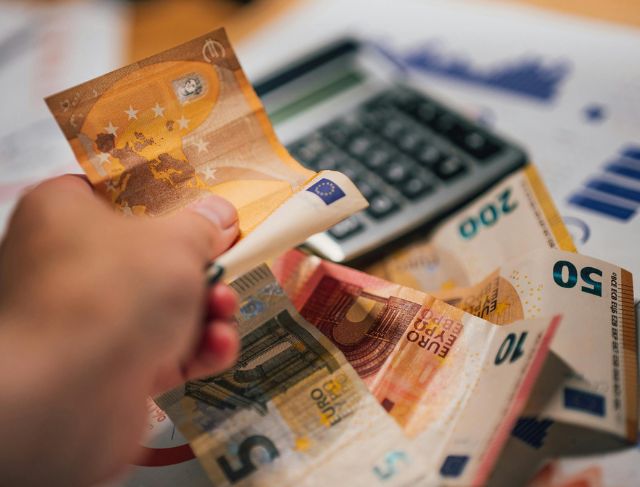

Spending credit card cash-back rewards right at checkout is the biggest mistake you can make with them. Those shiny “Use Rewards to Pay” buttons may look appealing but they’re just bait.
Now that you’ve read the worst part first (Like one of those crazy movie scripts that ends with huge twists), let’s break it all down in no particular order.
That “Aha!” moment that you didn’t know you needed
Imagine that you are shopping online like usual and being offered a “free” button to use your rewards on Amazon. You think to yourself how great this is because it’s basically free money. However, what you don’t realize is that if you use your rewards at checkout, you do not earn any cash back on that purchase.
If you pay with your card, you earn 1%, 2%, or even 5% cash back on that same purchase depending on the card and category. The difference between spending your rewards and paying with your card using those rewards is this; Spending $100 worth of rewards gives you a balance of $0, whereas paying with your card gives you $102 (you earned $2 cash back) and you can then redeem that money to cover the $100 purchase you made.
It’s a small difference, but over the course of the year, that small difference adds up to a lot of money.
A new feature recently announced by banks has people paying with credit card rewards directly on Amazon.
Good for people looking for convenience.
Not so good for people looking at the situation strategically.
The reason is because the convenience element masks the fact that credit card companies primarily offer cash back when people spend cash—therefore, they do not give cash back for the use of rewards accounts to pay.
And let’s say you wanted to buy something “fun” like video games, electronics, or anything else that provides an instant rush of serotonin. When you do choose to make a purchase, there are 2 choices:
Pay with Rewards:
- $100 rewards goes away,
- nothing earned in cash back,
- the balance remains at $0.
Pay with the Card:
- Charge $100 on the card,
- get 2% cash back = $2 cash back,
- use $100 of your rewards to cover your charge,
- the total rewards left = $2.
It’s basically the exact same purchase, however, you chose a better way of going about the purchase.
And there’s an additional benefit—some credit cards that offer reward programs allow cardholders to redeem reward points for discounted gift cards. Not 1%…not 2%…normally around 10%. If you redeem 90% of your total rewards and buy a $100 gift card for $90, you could then go ahead and use that gift card to make the purchase.
Have you actually made a mistake by not claiming cash-back? Most definitely. Is 10% better than the 1-2% you could’ve had on a cash-back? Absolutely.
This is the best way to exploit cash-back. Most people do not utilize this method, but it can produce amazing results if you purchase from the retailers in the issuer’s gift-card catalogue.
For some, this may not be a favourite thing to hear, but the fact remains that many credit-card users lose out on part of their cash back rewards because they choose the “easy” route instead of maximising their rewards potential.
That is okay. That is normal. That’s not a bad thing. That is not an issue.
The solution is recognising when your card is assisting you in earning a reward and when your desire for convenience is causing you to lose out on reward potential.
The credit card optimization process is a layman’s perspective.
Cash back rewards from credit cards only have real value when they are used in the most efficient manner. Your credit card issuer offers you tools for leveraging your cash back rewards, however, some of these tools will underperform compared to how appealing they seem upon casual inspection.
Which credit card do you use most frequently, which is your current go-to cash back credit card? Almost every consumer has a go-to card, and the card they choose typically has the highest cash back return for the least amount of effort.
For example, don’t be fooled by all those bright checkout buttons telling you that you have earned cash back rewards using your card. Instead, make sure to apply your credits to your statement after using your card.
You’re also encouraged to use discounted gift cards when it’s appropriate. All these small actions add up to maximize your reward potentials.