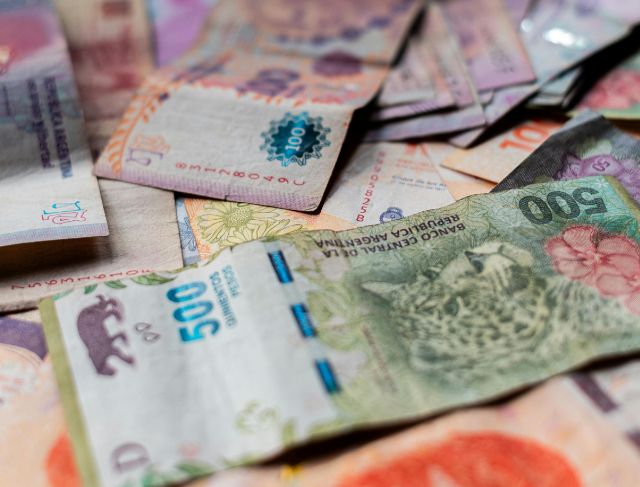

Your deposits in your bank account are subject to being devalued every day because of inflation taking place right before your eyes without your knowledge or any warning signs. There’s no drama; all you see is how every single day your dollars are becoming worth less than they used to be with reference to the same number of dollars it takes for you to buy what you want. You will continue to see the same amount in your bank account subtracting how much less you can purchase with that amount over a long period of time.
Here’s How You Can Understand Where Your Money Has Gone Because of Inflation
Look at the difference between purchasing a cheeseburger decades ago versus today. You could have purchased a cheeseburger for only a few cents, but now it has gone from only costing you a few pennies to costing several times more than it did before even though the hamburger has not changed very much since then.
- You didn’t get a bigger hamburger.
- You didn’t get additional ingredients.
- You simply paid more for exactly the same thing.
This is inflation explained at the most basic level — the prices of everything continue to go up and the products remain pretty much unchanged by comparison.
This continues to happen to everything that you are purchasing — food, housing, automobiles, education, and even entertainment. The dollar value that you hold and have had for an extended period time continues to be worth less and less while the cost of living continues to be worth more.
Numerous individuals imagine that inflation is the result of issuers printing excessive amounts of cash in massive piles, typically, they picture graphic images such as an enormous machine printing dollars or stacks of printed cash or a vault full of freshly printed cash at their local bank.
In contrast, the majority of new money does not get minted as physical cash.
New money is generated digitally by the banking system. The creation of new cash occurs when banks originate new loans, whether for the purchase of real estate, business investment, or individuals making personal purchases. The cash was created by banks in the process of transferring funds to an individual through a loan.
The bank creates cash by transferring funds from a borrowing bank to an individual lending bank, rather than creating cash as a result of originating a new loan.
As a result, there are more loans to provide funds for individuals to purchase various items; therefore, the more loans created, the greater the amount of cash in circulation within the economy. There will typically be an inflationary effect (when there is ample cash available) on prices.
While the process is somewhat obscure, it has a profound impact on how we all experience and view the world every day.
By using the example of a pizza, we can see how all this takes place. We can represent eight slices of pizza and equal them to the total amount of wealth in the economy. When new money is created, the pizza remains the same size as it was before, but now it has nine slices instead of eight.
With inflation, a whole pizza (i.e., all goods/services) stays the same size (i.e., all goods/services), but when more slices or new dollars are introduced into the market (i.e., inflation occurs), existing slices or dollars lose some of their value. The actual quantity of goods/services has not changed at this point; it is just that now there is more money chasing them (i.e., inflation).
As money flows more freely, people begin to spend, invest, and borrow instead of saving. This increased spending, investment, and borrowing results in an increase in the economy’s total output or GDP. An increase in GDP equals more job creation, more innovation, and greater competition.
Inflation also serves to diminish the total value of outstanding and paid-off debts over time.
A classic example is the value of a house purchased many years ago for a relatively small price compared to what the house is now worth today. As prices and wages rise, any loans taken out to purchase a home will become easier to repay since the dollar amount owed on the loan will decline in terms of purchasing power—the real value of what is owed decreases over time. This is one of the many ways inflation encourages people to invest their money in assets that will increase in value (e.g., real estate) rather than holding cash (e.g., under a mattress).
So, oddly enough, inflation can spur development.
The Untold Negative Consequences That Are Not Discussed Often Enough
As a byproduct of inflation, economic expansion occurs. However, it does not impact everyone equally in our society. Individuals who invest in asset types like property, stocks, or companies generally benefit since their asset values rise or fall relative to inflation. But individuals who solely deposit their assets (cash) into a traditional savings account will likely experience lower purchasing power over time than those with invested assets.
As a result of the previous point, there is a clear disparity between the wealth defined by invested vs. uninvested assets.
Individuals of high net worth typically have many ways to invest and hold wealth in a form that protects them against inflation. On the other hand, less affluent individuals primarily hold their capital in cash form (mainly for eventual purchase power or to use for immediate supplies). When they create reserves for times of distress, rising prices erode the value of the reserves more quickly, making it more difficult to attain long-term financial security through savings.
To put it simply, inflation does a stealthy job of increasing the income inequality in our country.
Stimulus Funds: Solution Forward, Solution Backward?
While in an economic crisis, often times an economy does inject greater than normal amounts of money into an economy to help fight through an economic crisis. The use of stimulus checks and or emergency funding can be a great source to help individuals pay their bills, feed their families, and get through an economic crisis.
While this provision of funds is helpful (to a degree), in the short-run, it can help save lives.
But there’s another side to the story. Adding a large amount of new money into the system increases the money supply, which can contribute to inflation over time. While people receive immediate help, the long-term effect may include higher prices and reduced purchasing power in the future.
It’s like a double-edged sword.
On one side, it keeps people afloat during tough times.
On the other side, it can create economic pressure later.
There’s no perfect solution, which is why inflation remains one of the most debated topics in economics.
So, Is Inflation Good or Bad?
The honest answer is: it depends.
A small and controlled level of inflation helps economies grow, encourages investment, and reduces the burden of debt. But high or uncontrolled inflation can hurt savings, increase inequality, and make everyday life more expensive.
It’s not purely good or purely bad.
It’s more like a tool — useful when managed carefully, dangerous when it gets out of control.
doing nothing with your money can be risky in an inflation-driven world. Keeping all your savings in cash means losing value over time, even if it feels safe.
That’s why many financial experts encourage investing, building assets, and finding ways to make money grow instead of letting it sit idle.
Because inflation never takes a break.
And while it moves slowly, its impact on long-term wealth is very real.