
When most people pass through Times Square today, they’re overwhelmed by the large LED billboards, the number of Broadway theaters, and the amount of people walking in all directions and won’t realize that one of the most famous luxury hotel brands in the world grew out of two rich cousins’ disdain for each other.
The Waldorf Astoria was never meant to be a global hotel empire; it was born out of a family feud between two members of one of the wealthiest families in American history. The Antipathy between the two ultimately sparked huge changes to parts of Manhattan and was a catalyst for the evolution of luxury hotel brands in New York City.
Before Times Square became a neon-plated melting pot of tourism, entertainment, and chaos as we know it today, most of Manhattan was still under development, and one family owned vast amounts of property in what was to be Manhattan—The Astors.
John Jacob Astor was a German immigrant to America shortly after the end of the American Revolutionary War, who started the Astor family fortune and came from a small town called Waldorf, which became important in naming part of the hotel empire later on. At first the land he purchased in Manhattan was like walking through what seemed like a rural farm, and with no indication in the 1790’s that one day it might become one of the most valuable pieces of real estate on the planet.
Through the course of building his wealth from both fur trading and property investments, Astor accumulated some unbelievable wealth and was basically a modern-day billionaire. His reach went far beyond his own New York City business and can still be seen present-day, and as of 2020 there are places in the country named after him. He has actually had several locations throughout the United States named for him including Astoria, Oregon and Astor Place, Manhattan (where the subway still stops).
By the end of the 1800s there were two descendants of John Jacob Astor, IV and William Waldorf Astor, who were each controlling vast amounts of the Astor family fortune and were cousins to the other, yet still had rivalries with each other for almost anything and everything.
Newspapers covering high-society events tracked the ongoing disputes and differences between social classes, often discussing who had more money, the status of their relationships, and family issues. The most significant of these issues revolved around social status in New York City’s upper class. At that time in history, high-society families competed with each other by maintaining a high level of social reputation.
William Waldorf Astor ultimately made the decision to break down his existing home and replace it with a first-class hotel called the Waldorf. This caused a great deal of surprise for Manhattan’s upper class. It was unheard of for the affluent of Manhattan to take the land that belonged to their family and improve it by building a beautiful hotel for tourists and visitors to share.
The new hotel blocked the sunlight from the Astor’s garden and created a constant stream of new people in the Astor’s neighborhood, and ultimately changed the character of the area where the Astor’s lived. Rather than ignoring the existence of the Waldorf and accepting the new hotel as part of their community, the Astor family responded in what can only be described as the most extravagant manner possible.
With two enormous hotels situated side by side in Manhattan, each operated by a competing cousin with the intent to have the best hotel.
These hotels were much more than just places to stay and quickly became the epitome of sophistication and modern-day luxury through extravagant restaurants, theaters, ballrooms and lounges filled with beautiful decorations and rich design. They served as social hubs for New York City’s upper-class guests.
Due to their desire not to continue this rivalry indefinitely, both hotels merged under one common management style and collectively became the Waldorf-Astoria with its name taking on attributes from both the Astor and Waldorf families’ names. Ultimately, this hotel has expanded its name around the world and is a synonymous name associated with high-class hotels.
As Manhattan grew further north, and its transportation system improved, another great change was also taking shape and developing in New York City through the newly constructed subway system that was starting to rapidly expand within New York City. One major subway station was created at which would eventually occupy what presently is Times Square within New York City; after this subway station had been constructed; this larger section of Manhattan quickly became a significant business and entertainment hub within Manhattan.
In order to keep up with these changes and try to ensure that he would not lose at another opportunity to create and operate luxurious hotels near the developing theatre district located near the time of the start of the 20th century; William Astor constructed a second luxury hotel named The Hotel Astor close to this developing theatre; John Jacob Astor IV built The Knickerbocker Hotel immediately adjacent to The Hotel Astor and created an agreement for there to be a private subway exit located in The Knickerbocker Hotel directly into The Knickerbocker Hotel.
Picture having the wealth to dictate to city engineers that subway rail lines can only be installed through your property if you receive exclusive access to them at your hotel. Even now, pieces of that original access can still be found beneath the streets of New York.
The fierce rivalry between these tremendous hotels led to the establishment of theatres, dining establishments, tourists, and nightlife businesses in the neighbourhood.
Therefore in a bizarre manner, family feuds played a significant role in the creation of one of the greatest entertainment districts in the World.
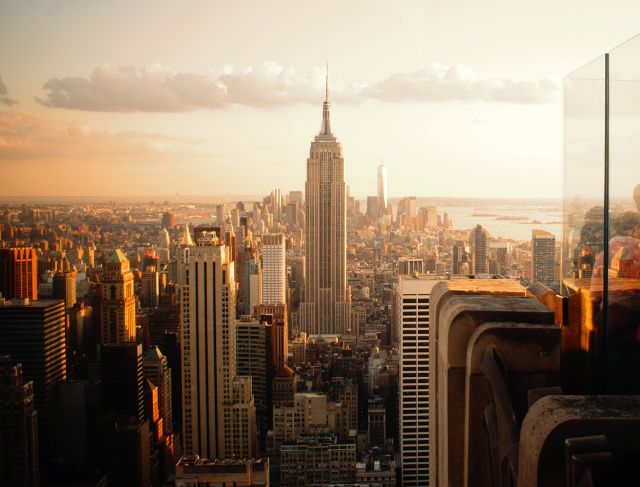
The First Waldorf-Astoria was ultimately destroyed by a developer in 1929, when it was replaced by the very famous Empire State Building, which would eventually become a well-known icon of New York City’s aspirations.
The Knickerbocker Hotel is located close to Times Square and still stands to this very day. Most people will walk by it without ever realising that they just passed a piece of luxury hotel history that is part of New York City.
The Waldorf Astoria was not created through years of planning and consideration of what the perfect hotel should be. Instead, it was born out of pride, competition, wealth, ego and family strife. To this day, the combination of these things has created a hotel that is one of the most respected brands in the world.
The larger-than-life ambitions of the city shaped its evolution; the outrageous wealth of individuals who sought to make a statement or imprint on Manhattan before someone else had done so influenced how it was developed. The rivalry between the Astor family caused them to compete with one another through architecture.
While the name Waldorf Astoria continues to represent elegance and luxury all over the globe, behind the beautiful lobbies and high-priced rooms lies an interesting human story involving jealousy, status battles, and two cousins determined not to allow each other to win at any cost.