

People may not think of an association between Iceland and tomatoes.
Most people associate Iceland with volcanoes, glaciers, waterfalls, black beaches, and snow. Farming? Growing fresh vegetables seems impossible in one of the coldest and most difficult landscapes.
Nevertheless, Iceland has greenhouses that grow thousands of tomatoes every year in one of the harshest terrains.
And the secret is not the weather.
When you think of Iceland, nothing comes to mind related to agriculture.
The land is mostly volcanic, temperatures are not so warm during the year, and in winter the days are short.
However, the underground space of Iceland is an excellent source of heat.
Long before current technology, nature was providing heating for free.
The Future of Greenhouse Farming in Iceland
The real advances in this field happened at the beginning of the 20th century.
Starting in the 1920s, businesses in Iceland started constructing greenhouses near geothermal areas to utilize the hot underground rock in a more environmentally-friendly way.
The great thing about geothermal energy is that it saves on expensive fuel and helps to disinfect the soil at the same time.
Thus, vegetables which can only grow in very warm climates were grown successfully in Iceland.
Icelandic farming was changed forever through the use of geothermal energy.
A Unique Restaurant
One of the best examples of geothermal farming is Friðheimar, a family-owned greenhouse farm located on the way to the famous Golden Circle.
From outside, it looks like usual greenhouses.
However, once you go inside, you will see that it is like a paradise.
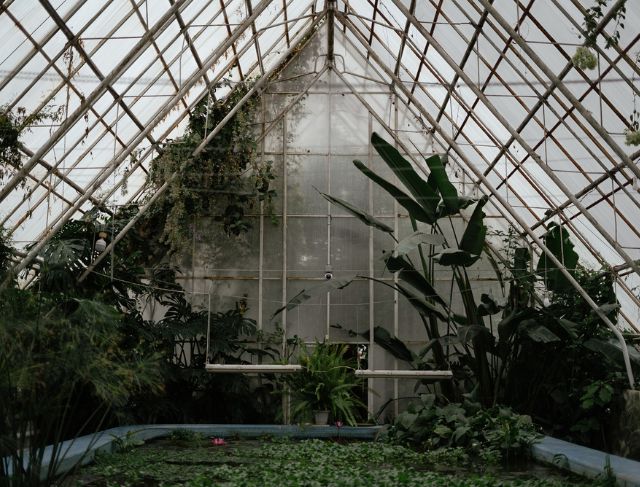
The greenhouses are packed with tomato plants giving a fresh scent of growing tomatoes. In the middle of this greenery lies a restaurant where visitors can enjoy their meals among the plants that were used to create the food.
It is a dining experience that is unique.
Tomatoes as the Main Ingredients of the Menu Items
As the greenhouse focuses solely on tomatoes, one should not be surprised that most of the dishes involve tomatoes.
The most popular dish is the unlimited amount of tomato soup along with the bread served fresh from the oven. The meals are extremely comforting and loved by many who visit Iceland.
Fresh tomato pasta is another suggested dish, where the sauce is created from homegrown tomatoes harvested close to the restaurant.
Moreover, the dishes offered are complemented by many drinks made from tomatoes.
The drinks also proved that something as simple as tomatoes can have an unusually broad range of applications.
A Farm Producing Hundreds of Tons of Produce Annually
Friðheimar is not just a tourist attraction.
It is a working farm where around 360 tons of tomatoes are produced annually and offered to local markets in Iceland.
Taking into account the country’s simple weather conditions, this is a considerable amount of produce.
Thanks to geothermal farming, Iceland can grow a significant part of its vegetables itself, without having to import every tomato from abroad.
Utilizing geothermal resources has made Iceland a worldwide pioneer in the area of renewable energy.
Geothermal energy is helpful in various industries as it supplies heat to not only greenhouses but also households.
Geothermal resources heat a house, generate electricity, warm a swimming pool, and many other places in Iceland.
While tourists are greeted by hot springs, Icelander citizens perceive geothermal energy quite differently.
Another aspect of the Icelandic culture
Many tourists visit the Golden Circle and see geysers, waterfalls, and lava fields.
Visiting greenhouses may seem less interesting.
Places, such as Friðheimar, show one of the sides of Iceland—a country where original ways of utilization of geothermal resources were invented, and creativity flourishes in extreme conditions.
A stop in the Golden Circle worth having
One stop while exploring the Golden Circle that is well worth a visit is Friðheimar.
This stop is unlike any other you can make in the Golden Circle since it is not just another scenic spot or waterfall.
It is the perfect place to discover the local cuisine, sustainable agriculture, and see how geothermal energy is used in the Icelandic daily life.
It teaches and entertains without giving an impression of being an exhibition.
Iceland proves that nature is quite capable of helping itself
It is almost unbelievable to think that tomatoes are cultivated in the country known for its glaciers.
Nevertheless, Iceland has turned its geological wonder into an agricultural advantage.
By means of geothermal energy and modern greenhouse farming techniques, such places as Friðheimar have made the unyielding nature give benefits to people.


