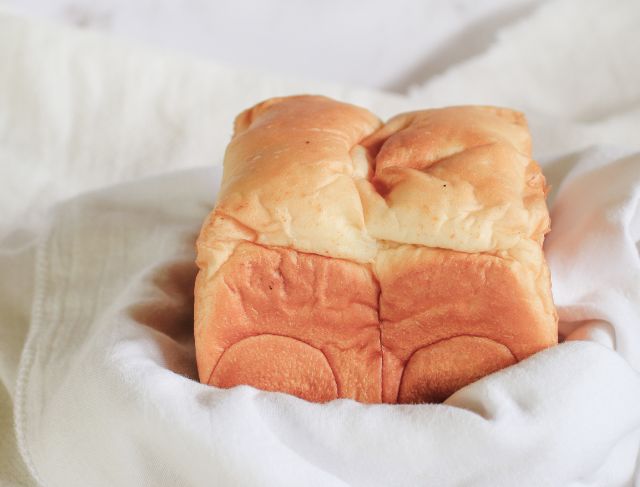

When you take your first bite into a piece of freshly baked Hokkaido milk bread, you will feel as if you are biting into a cloud of deliciousness because there are no words to describe how wonderful this bread is. Hokkaido milk bread is incredibly soft, has a hint of sweetness, and has a lightness that some people say is comparable to eating a cloud.
This is somewhat surprising for a country that has historically been known mostly for their rice, as Hokkaido milk bread has become one of the most successful Japanese baked goods worldwide.
What Makes Hokkaido Milk Bread Different?
Hokkaido milk bread is beyond soft compared to the majority of sandwich bread available. The secret behind its incredible texture comes from a method called tangzhong, which originated in China. In this method, a small amount of flour is mixed with water and cooked until it forms a smooth paste, which is then added to the dough.
The cooking part of this process helps keep moisture trapped in the bread, so Hokkaido milk bread will stay fresh and soft much longer than regular breads. The end result is a feel that is almost out of this world; it is so light, fluffy, and creamy at the same time.
Hokkaido Milk and Its Importance
The second ingredient for this bread’s identity is actually milk.
Milk from Hokkaido, Japan’s largest main island located in the northern part of the country, has a reputation for being some of the best in Japan. Due to Hokkaido’s colder climate, abundant wide-open spaces, and a thriving dairy farming industry, it’s no surprise that Hokkaido’s milk is known for its quality.
Hokkaido milk is often described as creamier, richer, and generously sweet compared to standard milk. Its unique flavor gives this bread its signature flavor while not dominating the delicate balance of the dough.
There are many home bakers in other countries that replicate this effect by combining regular milk with sweetened condensed milk, resulting in a similar creamy quality.
This Bread Almost Didn’t Exist
While milk bread is a very popular type of bread in Japan today, the history of Japan with both bread and milk is relatively new.
Historically, the Japanese people consumed very few dairy products. They did use milk occasionally for medicinal purposes; however, it wasn’t consumed as a regular part of the diet. Similar to how bread was introduced to Japan by Europeans missionaries during the sixteenth century, it too became an infrequent food consumed by the Japanese people.
During the Edo period when Japan closed to outside trade and influence, bread was basically eliminated as a common food from everyday life.
For many generations, rice was always seen as the primary food for Japanese meals.
The Turning Point That Transformed Japanese Cuisine
The Meiji Era in the late 1800s marked a drastic change in Japan.
The success of the Japanese government’s initiatives to modernize Japan was largely due to the strong influence of other nations. The Japanese Government began to promote improved nutrition through dairy products. With the increase in dairy farming operations due to the demand for Milk, Japan has seen the establishment of thousands of new dairy farms throughout.
During this time, bread also became popular, but in a different way than Western breads did. Bread in Japan was much sweeter and softer than traditional Western-style bread, which ultimately led to the development of Milk Bread as a distinct type of bread.
Hokkaido: Home of Japan’s Best Dairy Products
The Hokkaido region is significant in the history of Hokkaido Milk Bread.
In the early 1900s, the Japanese government worked to develop agriculture in Hokkaido by providing funding and assistance to farmers who wanted to establish dairy farming. The development of cooperative systems across Japan helped guarantee that milk produced in Hokkaido would find its way to customers all over Japan.
The cooler climate of Hokkaido was perfect for raising dairy cattle, and as a result, Hokkaido became Japan’s primary source of milk, producing high-quality dairy products that continue to be well-regarded by consumers both in Japan and around the world.
Hokkaido milk is now used in such popular products as: Ice Cream, Cakes, and Specialty Drinks.
Following World War II, Asia experienced another important change.
To address food shortages, Japan found an alternative solution. Wheat flour and powdered milk eventually became more prevalent due to increased imports into the country; this increased access made it possible for many millions of children to receive their first exposure to bread and milk through school lunch programs.
Many children grew up consuming these two items on a consistent basis throughout their childhood.
Over time, bread transitioned from being a treat eaten occasionally as an adult, to a dependable staple eaten by people on a daily basis. Convenience stores started selling sandwiches, bakeries opened up everywhere, and more people than ever began consuming bread on a regular basis.
In fact, by the end of this growth period, household expenditures on bread in certain areas of Japan exceeded those for rice!
This item has become a staple in the modern Japanese culinary world.
Now, Hokkaido milk bread provides the foundation for nearly all sandwiches sold at various convenience stores located throughout Japan, is found at cafés and bakeries from one end of the country to the other, and has been adapted into dozens of unique variations by different cultures throughout Asia.
Interestingly, while Hokkaido milk bread may be well known as one kind of bread; the crusts and leftover pieces are quite often converted into panko breadcrumbs, which are used in many famous Japanese recipes involving deep-fried foods.
Hokkaido milk bread initially achieved regional success, yet has since emerged as a global phenomenon in the world of bakeries!
How Hokkaido Milk Bread Has Captured Our Hearts
There is nothing complicated about Hokkaido milk bread.
Its luxuriousness comes from its basic ingredients. Each slice has a tender texture, a rich flavor, and enough sweetness to be enjoyed by itself, slathered in butter, spread with jam, or filled with savory foods.
Whatever the venue—Tokyo, Seoul, or your own house—each time you take a bite into Hokkaido milk bread, your next bite will be as good or better than the first. And so you will have eaten half of the loaf before you even know what happened.
For a bread made from very basic but common ingredients, Hokkaido milk bread has accomplished something very unique in that every person in the world now has a place for this everyday food as part of their comfort food.