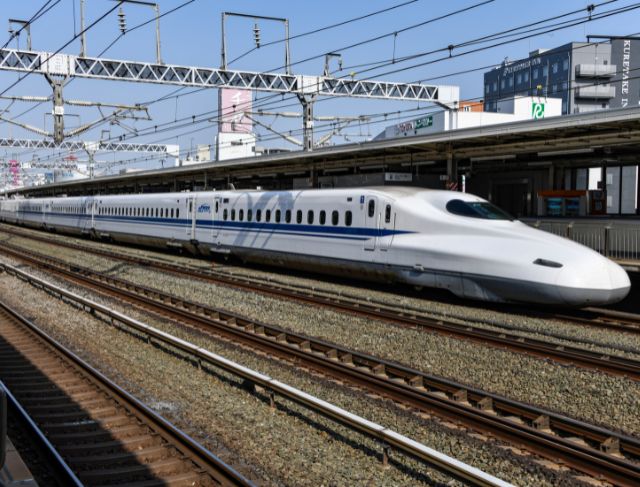

The renowned Shinkansen of Japan is more than just a means of transport; it marks the beginning of an exciting journey.
The adventure began with some panic. Although I had already booked my Shinkansen ticket online, I still had to pick up my physical ticket at Tokyo Station. As I realized the departure was coming closer, I started running between different counters, trying to find a person that would help me while I still had enough time to catch my train.
Tokyo Station seemed like a city inside of a city. The presence of stores, cafes, shops, and thousands of people made it very easy to get lost. However, the local people and my fellow travelers turned out to be very approachable and helpful, which helped me get to my final destination.
After finally obtaining my ticket, I boarded the Green Car, which is arguably the first-class section of the Shinkansen. Immediately, the cabin felt spacious, quiet and remarkably comfortable. With wide, reclining seats, ample legroom, immaculate interiors, and a tranquil environment, the long journey felt surprisingly comfy and relaxing, even when the distance was nearly 900 kilometers.
One thing that struck me was impeccable punctuality. Even before the train departed, the cleaning teams worked hard in each carriage, which ensured that everything went smoothly.
One of the main reasons I chose to sit on that particular seat is that I wanted to enjoy the view of Mount Fuji. Fortunately, after a few days of continuous rain in Tokyo, the clouds vanished. Seeing the most beautiful mountain from the running Shinkansen was one of the highlights of my visit and made my decision to take the seat by the window worthwhile.
The food service experience on the train turned out to be far more casual than I had anticipated. Instead of offering actual meals, there were options for light refreshments that could be ordered through the order system, which regrettably didn’t function well on my phone. Fortunately, the crew promptly provided me with a tablet to place my order, and my companions of this trip were coffee, water, and apple pie while I enjoyed beautiful views of the Japanese countryside from the window.
Even though most of the time the trip was extremely pleasant, the speed that sometimes reached 320 km/h had its effects too. After a few hours already, I began to feel a bit nauseous. Listening to some music and getting rid of my phone somewhat mitigated the effects of the speed, but the experience reminded me how differently high-speed trains affect different people, especially during prolonged trips.
No matter how many major cities, including Yokohama, Nagoya, Kyoto, and Osaka, we were passing by during the trip, the beautiful landscapes were changing from modern urban sprawls to tranquil neighborhoods and breathtaking sceneries constantly, without any delays at the stops.
The Shinkansen arrived in Hiroshima, after almost four hours of travel from Tokyo, on schedule. The distance covered made the punctuality truly amazing. At this point we had to think about how to get to the hotel, which was much easier than we thought because of the Uber service gathering clients and local taxis.
There was another example of Japan’s consistent focus on details during the taxi ride. The clean interior of the car, automatic doors, driver in a suit, and the peaceful atmosphere allowed to create a positive impression from the first minutes in the country. Taking a taxi in Japan was found to be very much different from using taxis in other countries.
During the stay at Hilton in Hiroshima, I met another pleasant surprise. Upon entering the lobby, I noticed beautiful bonsai trees that were at least 80 years old, amazing interior and charming hospitality. As for the room, it had a spectacular view from the window, big comfortable bed and a modern Japanese toilet with heated seats.
On the second day I was in Hiroshima, my previously formed expectations were severely disrupted. Despite the tragic past the city had gone through, it felt very clean and modern. It was calm and peaceful thanks to spacious streets, quiet districts, shops at every corner, and good-natured inhabitants.
I was looking for Hiroshima’s signature dish while wandering in the downtown area. I found out that my first restaurant was closed, yet a nice lady who was raising funds for children’s oncology helped me out and called another restaurant nearby. This conversation was very sincere and reflected the hospitable spirit of Japan.
At the restaurant, I saw the chef cooking the dish right in front of me. Hiroshima-style okonomiyaki is made of various ingredients laid one over another: noodles, cabbage, pork, sprouts, and egg. Nevertheless, it was one of the best meals I ever had.
The environment underwent a complete transformation that afternoon as I headed toward Hiroshima Peace Memorial Park. The rain made the visit more challenging but it gave me an opportunity to see the memorial hall.
There was nothing like being in front of the Atomic Bomb Dome. This preserved structure acts as proof of the destruction that took place back in August 1945, claiming many lives within seconds and traumatizing many others. The vicinity is nice and quite lively these days; however, this building has a lot of stories to tell.
Standing where historical events happened, I felt emotional as I was learning about the history. The city of Hiroshima today is full of life, but it also teaches the younger generations never to forget the consequences of war.
As I said goodbye to Hiroshima, I felt this trip has been more than just the experience of Japan’s bullet train system. It has taken me on a learning path that includes great hospitality, fantastic transport, fantastic cuisine, beautiful views and memorable history.
If there’s one thing I acquired from this trip, it is that Japan has something to offer for those willing to learn. From traveling on a Shinkansen to seeing the Mount Fuji, trying Hiroshima-style okonomiyaki and visiting the Peace Memorial Park, you will find that each stage of your journey leaves you with a lesson that is difficult to forget.