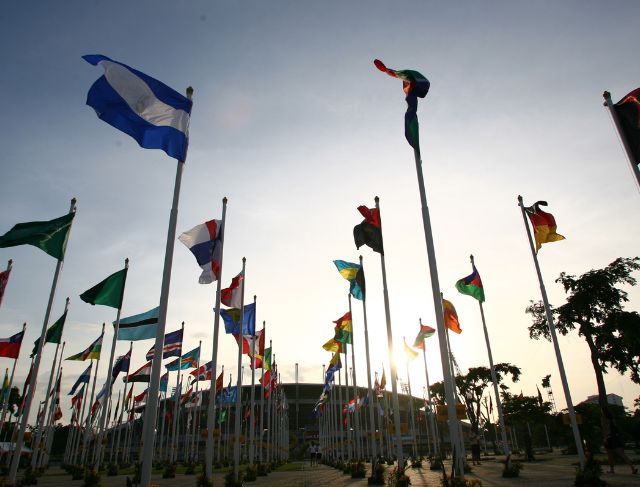

People tend to look at the flag of a country with indifference. For most, it’s just a piece of cloth, fluttering next to the airport terminal or on the cover of the passport, or on the television screen during the Olympic Games.
However, the flag represents much more than just beauty.
There have been so many colors put deliberate thoughts into each of the symbols, lines, and shades. Some of them symbolize independence, while others remind about some unpleasant moments in the history of the nation, and many others celebrate nature, culture, and geographical placement of the country. Once you understand the code of a flag, you can slip into the history of the nation without opening any books.
In this article, you will get to know three national flags that conceal many interesting stories about their countries.
The Flag of Papua New Guinea Is a Rich Combination of Many Stories
National flags are never too simple, but if we take a closer look at the Papua New Guinean flag, we will find out that this is one of the few flags that incorporates culture, history, wildlife, and astronomy.
The colours of the flag are quite significant.
Red along with black and white has been associated with tribal cultures across the country. Interestingly, these same colours were included in the flag of the German Empire, thus paying tribute to history.
There is also the Southern Cross.
Five white stars consolidate the Southern Cross, one of the best known constellations seen in the Southern Hemisphere. It reminds everyone about the geographical position of Papua New Guinea as well as its link to mythology.
The design is simple and at the same time reflects both ancient history and identity of the nation.
Flag of Eswatini Resembles a War Flag.
While some flags symbolize peace, the flag of Eswatini symbolizes the will of the nation to defend itself.
The country of Eswatini had its flag designed by King Sobhuza II, an important figure in the nation’s history. The design became the flag of the country during World War II.
The oxhide shield lies in the middle along with the traditional fighting sticks.
The bold red stripe that cuts through the center signifies the bloodshed that occurred in the past battles fought by the country. Hence, the flag, together with the shield and weapons implies that the nation has had a history composed of struggles rather than peace.
Unlike a lot of the current flags that focus on the beauty of nature, the flag of Eswatini seems to put emphasis mainly on the military history and the monarchy.
The flag of St. Lucia Gives Hints about Geography
At a glance, St. Lucia’s flag appears quite simple.
A blue background accompanied by a black triangle with yellow and white stripes.
However, all the parts of the flags are linked to the island in some manner.
The blue field represents the Caribbean Sea, which surrounds the island.
The tall triangular shape has a meaning purpose itself. It symbolizes the Pitons which are the two impressive volcanoes representing one of the most important points of reference on the island. They rise up from the coast and this is the feature of the landscape of St. Lucia recognized by every visitor of the island.
On the other hand, the black area in the flag is devoted to the native roots while the golden area represents sunshine, hope, and abundance.
Why it is Important for Travelers to Know About Flags
When traveling to a nation, you need to know its symbols in order to enjoy your trip more. You will not look at the flag as a meaningless item but understand its importance and its contribution to the world.
The topic of flags will help you in communicating with the locals. Many of them will happily tell you about the background of the flag.
Sometimes, learning more about a flag might bring you more information than any travel book.
Every Flag Tells a Story
Eswatini’s flag that is connected with the war, Papua New Guinea’s flag that marks the Southern Cross and the culture of the nation, or the flag of St. Lucia that reflects the beauty of its mountains and landscapes – each flag has its own special meaning.
The next time you travel to a new country, take your time to look at its flag.