
Mae Salong has an interesting background, located in the hills of northern Thailand in Chiang Rai, where you can find some very interesting Chinese culture and tradition along with great views and food.
Getting to this remote village is not easy which involves motorbiking around the curvy roads of the mountains, this can be challenge during the rains when the roads may be slippery and cloudy with rains pouring down unexpectedly.
The Chinese culture becomes evident even before entering the village with the presence of the Chinese style buildings next to the Thai architecture. Even the traffic signs show Thai writing along with Chinese which indicates the culture of the area.
Mae Salong was founded by the Chinese military men who resisted the Chinese Communist forces in 1949.
In the 1970s, Thailand conferred citizenship onto members of the community in exchange for aiding in the battle against communist insurgents. Eventually, the settlement progressed into a unique Thai-Chinese community that is still rooted in its Yunnanese heritage.
Tourists observe this legacy throughout the village where we find things such as Chinese restaurants with Yunnan-style dishes, Chinese goods being sold in shops, as well as locals speaking both Chinese and Thai languages. Locals also partake in traditional games that give tourists a chance to learn of this cultural practice that is rarely experienced elsewhere in Thailand.
Food is another attraction in itself as tourists can find things such as freshly steamed buns stuffed with pork, homemade snacks, roti, and Asian-style food within the settlement. However, tea is very special as mountains around the village were once known for their tea plantations.
Unfortunately, the tea business is linked to dark times in history. Mae Salong is located quite near the Golden Triangle, which is a region historically associated with opium trade. Historical accounts presented throughout the journey divulge that a number of these Chinese settlers became involved in growing and selling.
The growing of opium in the area has given way to agricultural options, such as tea, during the decades. The present municipalities deal with such teas as oolong tea, which is one of the most famous goods of this region.
There is also a small museum situated in the village, which allows for understanding the local military and immigration history better. Although the information is given in Chinese and Thai languages, the various exhibitions also facilitate people’s understanding of the region’s development throughout its years of existence.
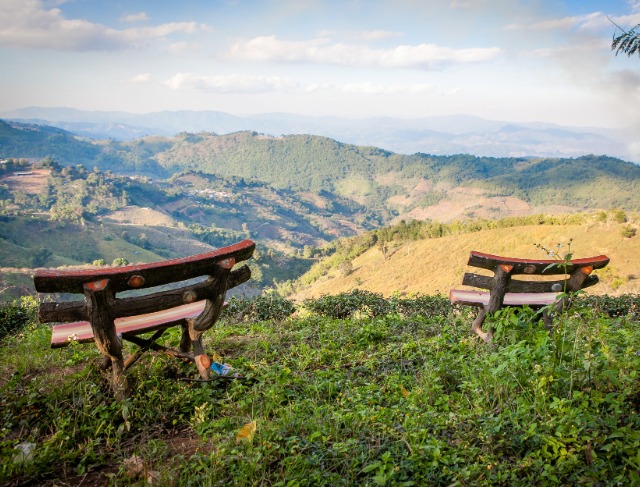
Apart from its historical value, Mae Salong is worth seeing because of its beautiful mountains. Its different viewpoints allow for observing wonderful green hills.
For those who wish to obtain a new experience outside major tourism spots of the country, Mae Salong provides such an opportunity.