
For many people, a vast amount of time is spent researching which famous landmarks to see, foods to try, and transportation methods to use when they are about to visit a different area. However, one aspect of travel that is frequently forgotten is table manners; knowing proper table manners in certain areas of China, Taiwan and Hong Kong is more likely to create an impression on you than knowing how to say a few words in their native tongue.
In fact, some of the most memorable events from a meal are not related at all to what was eaten!
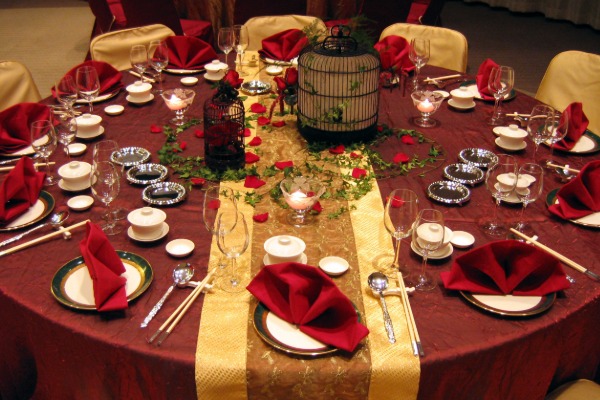
Picture yourself sitting at a large round table with many dishes that look delicious. No one looks stressed or uncomfortable; however, no one is sitting down at this point either. This may be confusing if you have never traveled to a location with Chinese dining traditions.
What is actually occurring at that table is silently determining where everyone will be seated for dinner. The order that people will be placed at the table is very heavily influenced by age, status, family ties and how important of a guest they were at that function. The people who will be given the most honour when they are placed at the table are generally seated at the farthest distance from the entrance to the facility.
Once everyone is seated, that is when your real experience will begin!
The difference between the western-styled meals where people eat individually on their own plates vs the traditional Chinese style of eating, where numerous dishes are served in the centre of the table for all people present to share and eat from them.
The only food that is served individually is a bowl of rice.
Some foods may even taste stronger or saltier than intended if you eat them without rice.
One lesson many newcomers learn right away is Patience.
Once the food arrives, it is deemed courteous for older people and/or more honourable guests to serve themselves before everyone else has the opportunity to do so. If you start reaching over the table or grabbing food immediately upon its arrival, it will appear to be disrespectful. Therefore, most people will wait their turn to make sure they have access to the same dishes that are going to be shared by everyone else eating.
The famous rotating tray that is commonly referred to as a Lazy Susan, ultimately, makes it easier to share food between those who have not yet gained access to it.
However, when there is someone that is currently serving themselves and you start rotating the tray at the same time can result in a very awkward and frustrating situation. You should always look around the table before rotating the Lazy Susan to ensure it will not be a problem for anyone else at the table.
Some of the more significant rules of dining are related to dining utensils – specifically chopsticks.
Many travelers are concerned with how to hold chopsticks, but dining etiquette is more important than having perfect technique. An example of this is placing chopsticks upright in a bowl of rice; it is commonly seen as improper.
Though it may seem innocent enough to place chopsticks upright in a bowl of rice, the association with incense offerings during funeral memorials gives it a cultural reference from which the dining experience has been built around.
Another inappropriate example is pointing at others with chopsticks; it is also bad manners to use chopsticks to spear food instead of scooping or picking it up correctly with the chopsticks or other utensil (if allowed).
As long as you are not using your chopsticks to eat or are finished eating, it is usually safest to store them together on a chopstick holder or on the wrapper if you do not have one.
Another interesting difference that exists between Chinese restaurants and Japanese restaurants regarding noodle consumption; in Japan, slurping noodles is acceptable, whereas in many Chinese dining and Taiwanese dining situations slurping noodles is considered bad manners.
Consequently, when dining in a Chinese or Taiwanese dining situation, people tend to lift their noodles off of the bowl and eat them in a more muted manner.
Soup follows similar guidelines according to etiquette.
The bowl toward their mouths immediately, as that could create large slurping sounds, making a lot of noise when consuming food to avoid making any noise during the actual consumption of the food.
These small details might not mean much individually; however, when combined, they create a picture of respect for the diners eating together.
When it comes to tea, tea is its own chapter.
In China, tea is not just a drink; it is a beverage rich with centuries of history and meaning. At almost every meal where tea is served, it is constantly being poured into teacups from the beginning of the meal until the very last guest has left.
- In addition, one expression of gratitude many new visitors to China will not realize is that after a cup of tea has been refilled for the guest, the guest will tap two fingers lightly on the table to express their thanks for the refill.
- Finally, toasts are a very important aspect of the dining experience in China.
A toast will take place at least once during a meal and, when compared to informal toasts between friends, the formal toast emphasizes and shows the respect and hierarchy between the guests. When toasting, the younger guests or guests that aren’t in high status will hold their glasses at a slightly lower height than the elder guests when clinking the glasses together. This small gesture can communicate humility and respect without using any words.
Towards the end of the meal, you may notice some fruit (watermelon, dragon fruit, cantaloupe, etc.) being served. While many of us would think of this as dessert if we were dining in the West, in China it’s been indicated that the host is beginning to wind down the meal.
Next comes probably the most entertaining aspect of the whole evening: the bill.
In the majority of Western countries we share the bill equally. Conversely, Westerners generally find it as somewhat an awkward situation (especially if they are not familiar with Chinese dining customs) when you request to split the bill among participants in the meal.
Culturally, hosts will usually attempt to pay for all guests, and typically, guests will engage in a form of playful ‘combat’ to be the one to pay the bill. Although it may appear to the casual observer that the guests are discussing the bill as if it were a friendly debate, in actuality, this behaviour reflects a generous gesture (of hospitality) on behalf of the host.
Following the serving of the main meal at someone’s dwelling, it’s appropriate to continue with the etiquette by offering to assist in clearing away dishes or cleaning up afterwards. In doing so, you are expressing appreciation or gratitude to the host; even if your offer of assistance is declined, it still has value to the host.
Having said all that, there is no need to memorise a long list of rigid/restrictive rules related to Chinese dining etiquette.
Having consideration for other people, being polite and respecting hierarchy, being part of a joint meal, and understanding that eating is as much about the relationship with people at the table as it is about the food, will make your experience at a Chinese dinner table a lot less daunting and much more fun.
Once you have this mindset, a Chinese banquet will not bring as much anxiety and will be a lot more pleasurable.
In fact, when you attend a family banquet in Taipei, Hong Kong, or Beijing, you will feel just as comfortable as the first dish arrives.