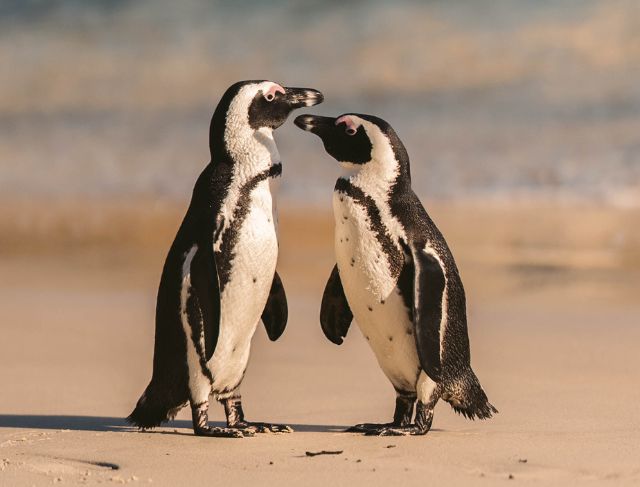

The fact that many people think of penguins as only being found living on glaciers and snow is very interesting. But after arriving in Cape Town, South Africa, you suddenly find yourself on a warm beach while the African penguins casually walk by; this is definitely a surreal experience, but in reality, they have populated that part of the world since they first migrated there thousands of years ago.
To see a living African penguin in the wild is not just another “check off” of a tourist event but a real appreciation of how amazing nature really is; as there are many stories that get written that are literally stranger than any story you may read or see in the movies.
Why African Penguins Live in South Africa
The only species of penguin found throughout the entire African continent is the African penguin. It is believed by many scientists that the ancestors of these birds migrated from Antarctica several million years ago and were able to adapt to the cold ocean currents of the ocean that run along the South Africa coastline.
Although they survive on ice forever, penguins that live along the coastline of South Africa do much better in their own unique environment; with their rocky shorelines, cool waters of the Atlantic, and sandy beaches all of these areas made the ideal home, which ultimately created one of the most unique wildlife experiences in the world.
Most first-time visitors to them are surprised, but after watching them for a short while they’re totally at home.
In The Past They Had A Very Different Life
Today they get looked after, photographed and admired.
But this was not always the case.
When sailors were making long voyages to Asia, they occasionally stopped at various locations along the coast of Africa to search for food to eat and the African Penguin was one of the easiest food sources to find.
Sailors used to eat Penguin meat and Penguin eggs and even use Penguin fat as a food source to survive on long voyages.
Unfortunately, the use of Africans for food didn’t stop there.
By the early 20th Century, nobody was interested in eating penguin eggs anymore as the price for them had climbed so high that the demand was much greater than was being produced so they were a luxury good. There was also habitat destruction occurring so that the population of African Penguins was in rapid decline and pushed towards extinction.
Turning From A Ingredient To Conservation Animal
Fortunately, attitudes did change.
With the rising interest of wildlife conservation in the 20th Century, more and more people saw the value of living African Penguins instead of just as a food ingredient. Governments and environmental organisations established colonies of protected African penguins with a focus on education and creating wildlife sanctuaries to help preserve the remaining population.
Visitors today enjoy admiring these birds at sites with strict regulations on conservation, which minimize human interaction.
The change in how wildlife has been, and is being, managed has been one of the most positive successes for wildlife that are currently happening today.
The Best Locations to View African Penguins are:
If you are going to Cape Town, then you will want to visit the two major places that are best for viewing African penguins.
Boulders Beach
Boulders Beach has become the most well-known location for the African Penguin in the country, and it is a beautiful location near the quaint coastal area of Simon’s Town. The boardwalks allow visitors to view hundreds of penguins without disturbing the birds. Additionally, Boulders Beach is one of the few places in the world where people and wild penguins use the same space along the shoreline.
In addition to the exceptional views of the penguins, Boulders Beach provides a fantastic view of the large granite boulders surrounding the calm turquoise water.
Stony Point Nature Reserve
Stony Point in Betty’s Bay is a favorite spot for travelers that desire a quieter experience. However, Stony Point has fewer tourists than Boulders Beach, but they still have outstanding penguin viewing opportunities. Stony Point’s natural environment is not as clean and neat as Boulders Beach, which provides an enhanced experience of the baby penguins in their wild habitat.
The tranquil environment here appeals to photographers as well.
The Real Threat is Not Tourism
Many people believe that tourists pose the greatest threat to penguin populations.
The much harsher truth is that penguins rely on access to stable, healthy fish populations (sardines and anchovies) in order to survive. The depletion of fish stocks has created situations where penguin adults must spend more energy, and travel further distances to find food for themselves and their young.
As populations decline due to limited food supply, penguin breeding is adversely affected, and juvenile populations are faced with low chances of survival due to lack of food.
To complicate matters further, global climate change and changes in ocean climate patterns have further exacerbated challenges faced by penguins.
The Decline of Penguin Populations
The numbers are sobering.
At the turn of last century, estimated African penguin populations were approximately 1.5 million.
While conservation efforts continue to improve nesting sites and provide supports for breeding populations, the African penguin is still considered to be endangered. Since each year that successful nests are made represent an important opportunity for their long-term sustainability and survival.
Have You No Idea How to Save the Penguins?
Witnessing the close-up look at these creatures may be one of the most memorable experiences a visitor to this part of the world will ever have. There are many reasons why visitors should make responsible choices when it comes to interacting with wildlife. A responsible approach will lead to reduced stress for animals while allowing researchers and conservationists continue their work in protecting animal colonies.
Entrance fees collected from visitors to various wildlife-related locations (e.g., nature reserves/marin, etc.) help directly fund local conservation efforts and provide resources for sustaining the natural habitat in which these animals live.
Besides Being Adorable
The African penguin is an icon of Cape Town and marks the picture of a bird people have come to expect when they visit. However, there is much more to the story of penguins than just what they look like. They also symbolize how we have survived & adapted to changing conditions over the years and are examples of what can happen when people stop conserving our environment.
Every visitor to Cape Town learns about the history of our wildlife and is sent on their way with a deeper appreciation for not only the wildlife in South Africa but all of South Africa’s resources.
Some people will also tell you the most memorable part of their trip to Cape Town was not the famous landmarks, but rather watching a penguin cross a warm sandy beach with waves crashing behind them; an example of how Mother Nature will always amaze us!