
If you ever find yourself looking at a Tokyo train map, it will look like a puzzle that only experts can solve. There are lines and many different colours of lines overlapping each other, as well as all kind symbols layered on top of each other. To an inexperienced eye, this looks like a complex mess. However, once you actually get used to using the train system, it is actually very simple.
Instead of remembering everything, the majority of people in Tokyo just rely on their phones. Seriously, with the help of Google Maps or other similar apps, you won’t have to do much work at all. The apps will tell you what train to take, when to get on and off, and what platform to get off at. Therefore even though the train map appears to be complex, you will hardly ever need to look at it for very long.
You will also notice that Tokyo’s Infrastructure is not designed for cars. Yes, there are cars on the roads but the train system is really what drives (pun intended) the city. Trains are extremely punctual, it feels rare to wait longer than a few minutes for a train. Once you understand the system, travelling around the city is very easy to do.
The system makes your life easier by providing you with a shortcut instead of having to memorize complicated station names. There’s a color and letter for every line, and each station is assigned a number that increases or decreases based on the direction you are headed. Rather than worrying about how to say the station name correctly, you’ll simply think, “I need to get off at stop number 12 on the red line,” and then you’re done.
There may also be stations that connect several lines together, which can seem overwhelming but it works to your advantage. Simply follow the colored signs in the same direction as the line you plan to take. Rather than trying to remember the details, just focus on recognizing the pattern: color of the line, number of the station, and the direction of travel.
You must first pick up a transit card before you board the train (in Tokyo, it’s a Suica Card or a Pasmo card). The two cards do have the same function but come from two different providers. You put money onto the card, then use it to tap in at the station and finally tap out when you leave the station. Your fare is calculated automatically and you don’t have to worry about purchasing a ticket for each ride you take separately.
These cards can be used everywhere, they are very helpful when you need to get something like grocery or snack from a store or vending machine, or even when ordering an Uber or taxi. In many ways, these cards can be thought of as a small digital wallet that works almost anywhere.
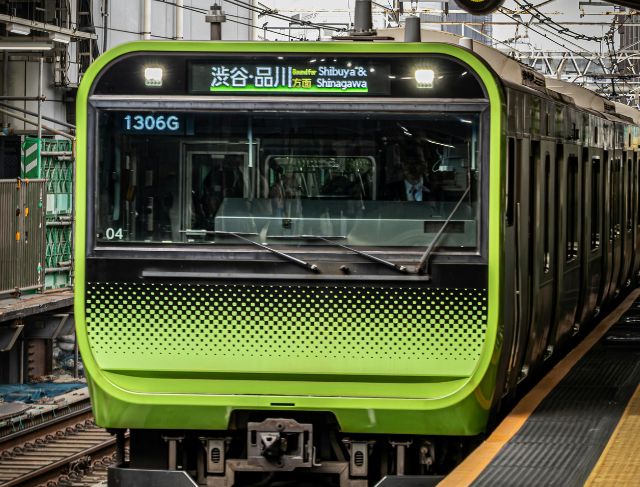
The most important thing about getting around in the transit system is the direction. If you are on the correct transit line but taking the train going in the wrong direction, you will ultimately end up at your starting point. Therefore it is very important to always check the transit app for the final destination of the train you are boarding before getting on. If you do this, you should have few, if any problems.
For example, suppose you are traveling to the other side of the city; your app will send you to take one line for a few stops before transferring to another line. The transfers are usually relatively easy because there are signboards all over each station indicating where each line is and also which way to go. Therefore, just follow the color of the line and name of the line to reach your appropriate platform.
When you are on board the train, there are a number of points you should be aware of to make your travel easier. For example, try to avoid traveling during rush hour (which can get very busy). Another habit that is worth developing is to always take your backpack off when boarding, placing it at your feet. This is to avoid bumping into other people. If you must pass through people; saying “sumimasen” (excuse me) makes a big difference.
The metro system, although overwhelming and intimidating at first, is actually built to be user-friendly. There is a standardization throughout the system, e.g. every sign has a uniform look and follow the same logical flow. After a couple of rides, it almost becomes second nature.
The practicality of the metro system is not just due to the size, but also due to its integrated operation. The metro is fast, dependable and highly efficient. After using the metro on a few occasions, you may find that you prefer this method of travel to any other form of transport in Tokyo.
The large map is not an item that has to be memorized. Simply learn the basics of the map, trust your mobile application, and follow the signs found in all stations. Before long, you’ll be travelling throughout Tokyo as if you’ve lived there all your life.