
Trying to make a train journey from Cape Town to Cairo seems to be something out of an explorer’s adventure book but there are parts of this rail route still available. And it is chaotic, not very reliable, and very frustrating at times. However, it’s more than just happened upon – it is a legendary tale in itself. There has been a love/hate fascination with journeying across Africa from its southern point to its northern point for over 100 years not because of its simplicity; rather, due to the degree of challenge associated with this journey. This challenge continues to lend itself to the mythical notion of this journey, especially for adventure travellers (backpackers), rail-fans and over-land type travellers.
If that wasn’t enough, Google Maps has another surprise in store for you and that is their inability to help you navigate to your destination. Enter Cape Town and Cairo and you will receive a driving distance rating and/or a route of approximately 10,000 km. If you enter the same two cities travelling via train, Google Maps will inform you that there are no direct train routes from one destination to the other. This is true to form because there is not one uninterrupted rail line connecting these two cities. However, there is a fragmented version of the very famous Cape to Cairo railway adventure, if you are determined, resourceful and can we say “improvise”, and can handle transporting a bag across some international borders on foot in hot weather.
The entire continent of Africa has a very complex history with rail lines that have been connected to the events of colonialism. Railways, when built during colonial rule, were generally built to move minerals, crops and other resources from inland, to the ports where they could be shipped out of Africa as quickly and efficiently as possible. These railways were not intended to unite the nations within Africa on one rail line.
After the rise of independence movements throughout Africa, large scale infrastructure projects were made slower as the Cold War and subsequent political instability continued to grow. As a result, Africa today has some long train routes – however, most of them are in separate pieces and disconnected.
For many years, the United Nations has attempted to create a better means of transportation across Europe and Africa via the Trans-African Highway network. The concept of the Trans-African Highway is a great idea and works well on paper – large roads that run across the entire African continent connecting each of the major areas will, however, be very difficult to design and build as they pass through deserts, jungles, mountains, and areas of conflict and between unstable countries. In fact, there is only one completed route through out the entire Trans-African Highway system today. Railways would experience the same difficulties as creating and maintaining a railway line through various types of terrain; however, trains are still one of the most environmentally and economically feasible ways to travel long distances.
Normally, the modern Cape to Cairo train trip will begin in South Africa and domestic rail services between Cape Town and Johannesburg is available. Although luxury trains like Rovos Rail and the Blue train actually operate on portions of the route in style (they are essentially rolling five-star hotels for the wealthy), you will likely be looking for lower cost rail, crowded stations, unpredictable schedules, and delays of long durations (if any) to travel as an average traveler.
From Johannesburg, the route becomes more exciting than before. One of the routes travels east through Mozambique. The train travels to Komatipoort (the border of Mozambique) after leaving Johannesburg, then the railway goes dead-ended. There is no sophisticated international crossing and no graceful transition. You literally have to de-train as if you were changing trains and walk through the border on foot into Mozambique. There are then more trains travelling north from Maputo which continue on a rail service into northern Mozambique. Some of the rail cars on these trains are very modern (from China) and air conditioned, which appears like something from the future compared to many of the older trains to the south.
In Zimbabwe there is another layer of unpredictability added to a journey, however, it also includes incredible views along the way. Train travel towards Bulawayo and Victoria Falls often involves a steam type of carriage that feels like it belongs in a different time. People sometimes dine in a steam carriage which has been refurbished to look like it was from the 1940s or 1950s. It is much more like an experience than it is a means of transport. Then outside of someone’s window, while on their dusty train, is a natural wonder in this world – Victoria Falls.
Crossing the well-known Victoria Falls Bridge, the experience is unforgettable. Unfortunately, most people are unable to remain on the train when crossing the bridge. The adventure is again a mixture of rail travel and walking across an international border. However, it is what makes this part of the journey worthwhile. We are not attempting the Cape to Cairo using an efficient methodology.
Zambia is home to TAZARA Railway, which is arguably one of Africa’s most interesting modern rail projects, being funded by China as part of the international environment during the Cold War. Its construction connected Zambia and Tanzania and greatly changed how people travel throughout this area of Africa. Unlike many parts of this long route, you’re able to stay on the train for certain border crossings, and immigration will come directly onto the train to stamp your passport. This has a wonderful retro feel to it. The segment of the line extends approximately 1800 km from the capital of Zambia, Lusaka, to the port of Dar es Salaam at the Indian Ocean.
Unfortunately, East Africa is an area with probably the largest “missing links” on the entire route so far. Train travel from Tanzania to Kenya, through Sudan and into Egypt is in disarray; there are disjointed railroads like the Nairobi – Mombasa route, but no uninterrupted rail connection north of Nairobi into southern Sudan. For those trying to make this portion of the overall journey, travel options include buses, shared cabs, air travel, and informal surface transport across regions that may not be politically stable and/or may require considerable logistical effort to reach their final destination.
Nevertheless, however, that area provides many of the most memorable and stunning landscapes in Africa. Route outside of mountain roads; region where coffees are grown; huge valleys & wildlife reserves along the route. Many people who travel say the delays make this experience better because it forces travellers to slow down & get to know places (which many travellers pass by) instead of just flying over them.
Re-joining Northern rail networks in Sudan & Egypt finally makes you feel it can actually happen; once you rejoin these networks, you do; however, you may be taking ferries instead of trains between points (depending on service) near Lake Nasser. As such, flexibility will become your sole means of surviving this journey – timetables can change immediately; there is little, if any, online info about stations – and, in many instances, the only sure-fire way will be to go & ask locals in-person!
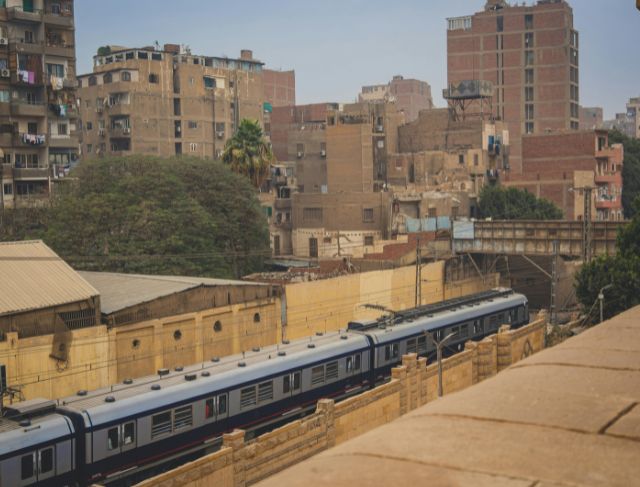
Eventually, these chapter ends with their journey being taken by trains, and waiting for weeks or even longer, moving from one train to another, ferry, bus, and across many borders – finally arriving at the final destination of their previously long journey, Cairo. The lively streets, overwhelming amount of traffic, heat of desert, and tall buildings represent the end of their ultimate journey from Cape Town, South Africa to Cairo, Egypt.
The key to the addictive nature of the Cape to Cairo journey is not luxury or comfort. It is the uncertainty of crossing borders and will be an earned experience; in addition, delayed trains will also be added to your memory; and timetables & schedules may be broken. Today’s traveller does not have any uncertainty in their mode of transportation, whereas the Cape to Cairo route would be more like the old world of exploring where you have to adjust to a new plan and there is both frustration and excitement with the adventure.
As far as train travel enthusiasts are concerned, it seems that a train trip from Cape Town to Cairo is among every traveller’s ‘bucket list.’ Although the Cape to Cairo Train is not currently operating at full capacity; perhaps that is one reason so many individuals want to be able to do it.