
If you were told that a cab would be able to manage by itself, a machine could brew your coffee, and a drone might transport your lunch, it would seem to be some kind of fantasy. In Shenzhen, China, however, it is simply another day in this city. They have long been past the stage of wanting to be modern—the city feels like it is already living several years ahead everyone else.
What is surprising is not the creation itself, but how normal everything is. Cars without drivers just sit and wait for passengers, drone deliveries take place in the air without calling attention, and people unlock services very easily. While some visitors pause to take photos, locals continue living their lives as if nothing extraordinary is happening.
A life-changing experience takes place when one rides a fully automated cab. In the beginning, it is uncomfortable to be in the back seat of the cab without any driver at the wheel. Not knowing how the automated vehicle will handle every turn, stop, and pedestrian, one becomes anxious about the ride. However, because the automated taxi is equipped with multiple sensors and cameras, it is obeying the traffic rules and making sure that it takes the right turns and stops at traffic lights.
It seems as if technology shows up where one least expects it. A visit to one of the tech malls in the city of Shenzhen is similar to stepping into the future. Robotic dogs entertain spectators, robot humanoids greet the visitors, and holograms hover in the air, while the prototypes of flying taxis give a hint that soon laymen will experience a day in which the roads are in the air rather than on the ground. Some gadgets look priceless, while others look like experiments still looking for a purpose.
Not every invention of such kind seems better than its classical counterpart at once. Watching a robot play chess or greeting the guests using humanoid machine is really interesting but still there is a feeling that something is missing. Games are enjoyable due to the people who sit at the table, not because of the perfect moves performed. The same thing is true about robot pets that manage to imitate movements quite well, nevertheless, replacing the bond of a man with a pet is still far away.
Learning about daily life in Shenzhen illustrates how much technology has changed society. Most purchases are made using a smartphone and QR codes, though payment with facial recognition is also becoming quite popular among residents. Although cash still exists, it is becoming less relevant as businesses resort to electronic transactions. For travelers, however, the challenge can be adapting to this system without a local phone number and legal identity in China.
Coffeehouses are changing as well. It is impressive to note that rather than being done by a barista, the coffee-making process is now performed by robotic arms. The coffee produced this way tastes just the same, which shows that automation can easily replace manual work. And still, it raises the question of what will happen to the thousands of people, whose jobs are clearly going to be replaced by robots.
There is no doubt that one of the most useful innovations created in Shenzhen is its drone delivery network. Instead of hiring a courier and waiting until he gets stuck in the traffic jam, people can receive food, beverages, or small items from the sky. The special landing places enable drones to land in a secure way, while people just have to pick the product up. It may seem very advanced today but after seeing several successful deliveries, one starts thinking that such systems may be quite common in various cities in the future.
In spite of such an innovative technology, Shenzhen is known to be a very comfortable city. The streets are clean, the use of electric cars makes the city quiet, and many people find public places attractive to spend their leisure time with their families or friends. Even if the city has around 18 million people, it is organized and comfortable than many other cities in the world.
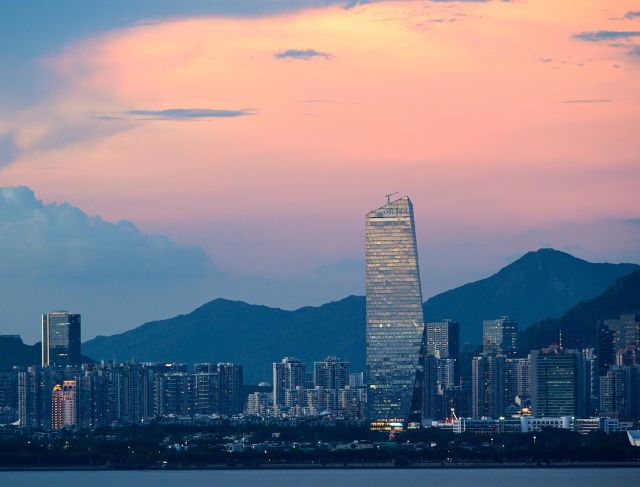
With the arrival of the night, Shenzhen undergoes yet another transformation. Magnificent skyscrapers come alive with bright LED colors and the whole city skyline is more reminiscent of contemporary art installations than of a regular urban landscape. It is hardly possible to imagine that just several decades ago this territory was just a fishing village. The pace of this transformation illustrates the theme of China’s modernization more than anywhere else.
The most important insight about Shenzhen is that it is not robots replacing human beings or AI invading people’s lives. The most important idea is simply the realization of how fast people can adapt when technology emerges that makes life easier. What amazes today’s visitors here will become ordinary for the next generation.
Ultimately, Shenzhen gives visitors one question, which does not have a simple answer. How much change are we ready to accept when technology begins to transform, for example, transportation, payments, deliveries, and cities?