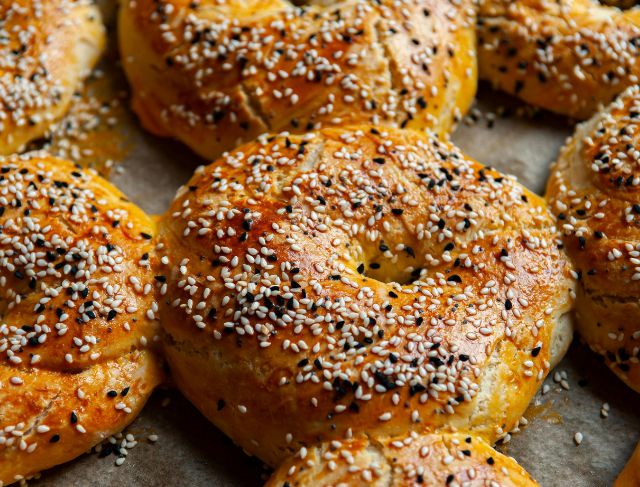

New York City’s Bagels gained immense renown within Western society primarily due to sheer word-of-mouth by those lucky enough to experience authentic versions sold at local bakeries. In fact, ask any New Yorker about their recent experience eating hot from a neighbourhood bakery, and the overwhelming consensus will be that it was the best bagel they’ve ever tasted, and that no other type will ever compare.
But interestingly enough, there’s no secret ingredient that makes NYC’s bagels so good.
New York’s famous tap water continues to inspire intense debate among bagel lovers concerning what drives the unique properties of New York’s bagel. While the quality of water does affect a baker’s ability to create their product, the reality is that there are more variables than simply good H20 that have a profound impact on bagel creation.
This is a big relief for aspiring bagel makers, since bagel-making success is more driven by craftsmanship than by geography!
Bagels date back long before there were any breakfast sandwiches associated with the City, as they were first developed in Eastern European Jewish communities long ago. With massive wave of immigrants from Poland came to America in the late 1800’s, many of them immigrated with their family bags (of family recipes) and associated culture and history. Local bakeries quickly adopted these traditional methods of making artisan-style bagels produced across Europe; therefore, bagels quickly became a common household product for residents living in Boroughs surrounding NYC.
Afterwards, this familiarity spread quickly across family households.
Families settled into the towns in close proximity to New York City and New Jersey, and transported their traditional baking methods that suited their families.
While they have the same origin, both styles of bagels became quickly recognizable.
The introduction of supermarkets has changed the game entirely.
Now that you understand how bagels are made from an all-natural ingredient perspective versus regular bread, it should be clear to see the difference.
After preparing (mixing) the dough for bagels with just flour, water, salt and yeast, the bagel dough is shaped into the familiar round shape. The hole in the bagel is not just a decorative feature, it is a practical necessity.
Occasionally age-old customs remain because of their practicality.
Each bagel goes through an interesting process before it is placed in the oven.
This boiling phase is what gives each bagel its unique crust.
Another thing to note, is that many original recipes call for a sweetener.
Sweeteners like barley malt syrup have been added to develop flavour, as well as to develop colour as it bakes into a rich golden-brown colour as when finishing baking..
Many times having “patience” makes a big difference.
As you have seen, toppings are a great way to show individual preference.
Some people are strong believers in eating a bagel with plain cream cheese because they feel it allows the bagel to show itself. Others are strong believers in making large breakfast sandwiches; filled with meats (i.e. bacon), egg, cheese, smoked salmon, and/or vegetables. The ultimate answer to which way to go will depend upon if the topping complement or overwhelm the bread.
Quality creates more impact than quantity. When ordering an excellent bagel; it should still be easy to take a bite without all of the filling falling onto your plate, and the outer portion should provide sufficient.
Tactile vs taste.
Bagels are more of a part of American food history due to their relationship with immigration than for any other reason.
A new batch of bagels on any given day has been made according to the recipes and traditions built over the years by many generations of families, bakers and businesses – and all who have been involved in creating this portion of our national food culture have also done so with the desire to share with the world what they love.
Bagels are not just for breakfast.
They’re also a reflection of how some of the United States’ most well-known and well-loved foods are the result of many different cultures contributing to the blending of their respective heritages into a new home.
So, if you happen to be in New York City or New Jersey, don’t waste your money at the grocery store – go to a local bagel shop, order a bagel while it’s still warm, select your favorite topping or nothing at all, and enjoy one of NYC’s best-loved culinary traditions exactly how they should be experienced!