
Movement created the lines rather than defined limits or neighborhoods. This city developed along transportation routes just like how civilisations have created their own geographic regions by relying on rivers as a source of development. Where railways (transit) were available, people migrated to that location. From this, housing developments were generated, factories built, and what was once empty land became part of the urban fabric.
Strangely, many of the most tranquil locations in New York City today were originally intended for the heavy manufacturing industry. For example, the High Line provides an experience that evokes serenity because of how the railway was originally constructed to allow freight trains to pull into warehouses; however, experience now is very similar to what one would expect from similar developments like Central Park—the tranquillity is enhanced by the fact that no one will be seen rushing at this location. The High Line has plants growing on/around tracks and people meander along rather than hurry.
Prior to the subway system, all of the activities within Manhattan were concentrated in the southern section. The streets were not well defined, nor was there any infrastructure in place for the transport of goods; therefore, there was no set pattern for how/where traffic moved. Therefore, the streets were heavily travelled using horse-drawn carriages or eventually using electric trains that ran parallel to the pedestrian traffic. This may sound like a chaotic situation that would create problems; however, it was also a very real scenario. The most notorious stretch of rail was 9th Avenue, which earned the nickname “Death Avenue” because of the number of incidents involving trains and pedestrians.
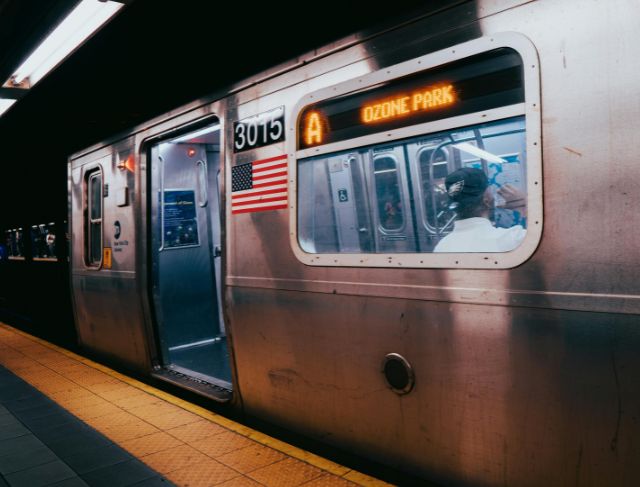
They tried out several different types of trains above ground. Some went above other traffic by creating elevated railways, while others used underground tunnels to push trains completely out of sight. Each changed how people travelled, but more so, it created a new city in which to live your life.
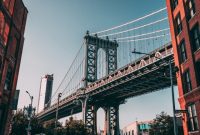
When the first electric subway system was starting to be put into place in the early 1900’s, it quietly restructured the city of New York City. All of a sudden, it didn’t matter how far North you lived; therefore, people moved to the North in Manhattan, and some crossed the bridges into Brooklyn and Queens as well. Disconnected areas became connected through this network of trains that run underground.
While the trains on the High Line were used strictly for transporting goods into warehouses and the buildings that surround it, the elevated train system would allow trains to deliver the necessary parts to build items such as the famous Oreo cookie. The High Line helped create a fast and efficient working environment in places such as Chelsea.
After World War II, trucks were used to replace train transportation, and the use of the High Line slowly faded. Several sections of the High Line were no longer used, some were even removed, causing much of the structure to be at risk of removal.
The community was looking positively at the former rail road as a potential for something new. What could the existing structure that is no longer serving a purpose be turned into? Not another industrial or functional site, but rather a place to recreate. The concept of creating an elevated park in New York City based upon an existing elevated park in Europe received increased interest and support.
As a result, New City now has the High Line—a greenway elevated above the city through portions of Manhattan. The High Line serves as a walkway/corridor that connects people living and working in Manhattan to the unique experience available at street level because of the elevated walkway. The former tracks that once supported trains now support a lush environment full of plants.
Chelsea has gone from an area that was comprised of warehouses and manufacturing facilities to a vibrant community. There are many galleries of art, and most of the industrial buildings have been repurposed rather than being torn down. Other areas within Chelsea, such as Chelsea Market, have evolved from sites of production to places to dine, shop, and socialize.
In ways that are often overlooked, steam locomotives and electric streetcars both changed the area where a city would expand, because they didn’t just provide methods for moving people around—they established the places where “life” would occur.
Today, you can take a subway under the city, walk through neighborhoods surrounding train lines, and climb onto an old railway line converted into a park; a series of connections stretching beyond what you see.