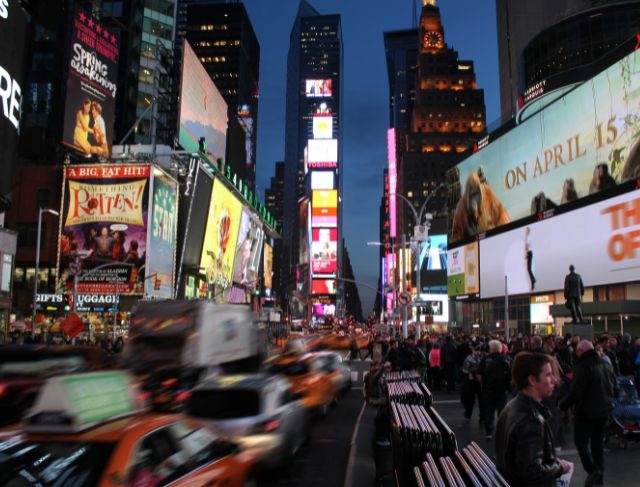

Loud, crowded, and pretty much insane, Times Square is not meant to be quiet; it’s intended to get noticed—and keep getting noticed. The chaos in Times Square works. Every year millions of people pass through Times Square simply because they want to feel that energy at least once.
However, if you take a close look at the area, you’ll see that it has very little in common with Manhattan. It has a very unusual layout for New York City compared to its strict grid structure. Instead of continuing straight, Broadway cuts through the city at an angle, intersecting 7th Avenue, creating an unusual large, open area.
The idea of an open area and impassable boundaries reminds me of walking through a forest. Picture not having to worry about buildings, cars, and other people, just walking down a path (created by Indigenous People) along a trail through the trees. That trail became Broadway as we know it today and has shaped New York City, and is still part of the grid in New York City.
Moving forward in time, this area was no longer the center of entertainment; it was a location known for its connection to horses.
When this area was originally named Longacre Square, it served as the center of New York’s carriage business with workshops, stables, and commerce that filled the area. It felt much like a working yard with little commonality to a destination that tourists would want to visit. But cities do not remain constant over long periods of time and Times Square is no different; this particular section in Manhattan changed quite rapidly.
Then New York had a subway station built underneath the area. This station allows for connection from numerous lines and expanding the accessibility of this location. This alone improved access to this location and gave it an increase in visibility due to the increase in access; it became easier than it ever was before to get there.
The New York Times relocated to their brand-new building right on the north side of the square to help promote their publication and renaming of the square after their publication. Thus, Longacre Square was transformed into Times Square. It wasn’t just a new name; it was an early branding attempt way prior to branding becoming common.
Soon after the first electric signs and displays illuminated the Times Square area and transformed the look of buildings into illuminated signs, electric signs and displays became increasingly elaborate and extravagant. A single billboard here can now be rented for tens of thousands of dollars per day, showing just how valuable attention has become at this unique location.
On New Year’s Eve, firework displays began to take the place of a traditional ball drop on the Times Tower. The calendar turned, and a once-local event became an event celebrated by millions globally (estimated at over 1 million in-person attendees plus millions of viewers from around the world).
At one time, this area became run down, crime rates increased, and business occupancy decreased. In a matter of a few years, the area went from being a family-friendly tourist destination to being known for things that are not family-friendly.
During the last few years, the city has made concerted efforts to restore the area to the way people wanted it. Illuminated / electric signs became brighter; physical street components and traffic patterns were redesigned; and broader sections of Broadway have been closed to vehicular traffic (thus enabling increased pedestrian activity). North to South and East to West, the identity/essence of the area has been transformed once again.
The Broadway area is part of the entertainment district and an advertising powerhouse, as well as being a cultural icon for New York City. The theaters in this area establish the heart of Broadway. They bring people into the area, who are there to see the highest quality performances. In addition to all those patrons in the area, the streets remain extremely busy at all times.
It is interesting to note that the building responsible for giving Times Square its name is typically not even apparent to you, as it is completely covered with advertisements and blends in with the visual chaos that it’s partly responsible for creating. Most likely you will not even know that you are looking at One Times Square.
Times Square is a place where history is buried under bright lights, meaning is hidden behind the hustle and bustle of activity and even something as basic as an intersection is transformed into one of the most famous locations on the planet.