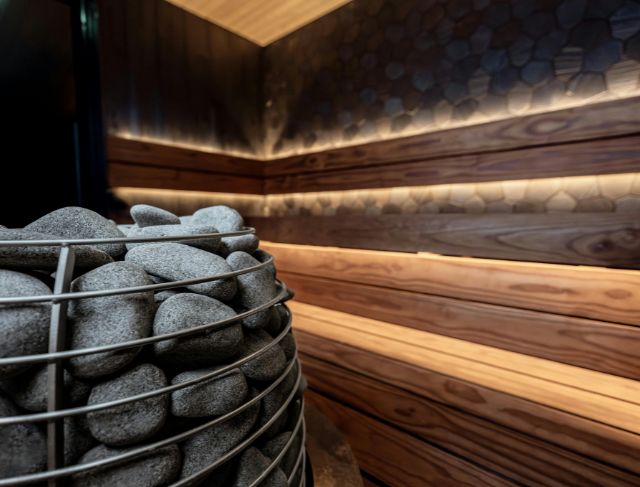

The first thing that comes to mind for many people when they think of Finland is snow, trees, the Northern Lights and lakes. However, if you were to ask any Finnish person what defines their country the most the common answer would likely be simply ‘the sauna’.
A sauna may seem like nothing more than some place to unwind or warm yourself up after an exhausting day to many travelers, but in Finland a sauna is so much more than that. A sauna represents not only a tradition but also a gathering place, a private space for relaxation, and in many respects, is one of the cornerstones of Finnish culture.
The importance of sauna to Finnish people can be seen in far more than just numbers. With approximately 3.3 million saunas for a total population of approximately 5.5 million people there is a sauna in nearly every apartment building or home, every place of employment and virtually every remote cabin across the entire country. You might even find yourself in a craziest of locations with a sauna; for example at some restaurants, inside ferris wheels, inside government office buildings and even during international deployments.
Sauna culture has remained popular in Finland for many reasons, but its connection to Finnish history is the strongest. Before there were hospitals, families believed that their home’s sauna was the cleanest room. The warmth and cleanliness of the sauna made it a natural location for significant occasions in families’ lives—such as giving birth. For hundreds of years, generations of Finns have associated memories with saunas.
Helsinki grew up to be one of the largest cities during the late 1800s and early 1900s and most people did not have room to install an actual bath tub, so they depended on using a public sauna. Most neighborhoods depended on having a community sauna.
One of the biggest shocks for visitors to Finland at their first experience in the sauna is how much reverence the Finnish people have for sauna etiquette. Inside the sauna there is a very calm and respectful atmosphere. Finns do not tolerate loud noises, disruption or any action that treats taking a sauna as a humorous experience. Most Finns use the sauna to remove any stress and take some time to be at peace with themselves.
It is not uncommon for visitors to be surprised by the amount of nudity that occurs in public areas such as saunas. Finnish people have a very liberal view of the body and this is especially true in saunas. Depending on the sauna location you may have the option to wear a bathing suit, be required to wear one, or prohibited from wearing one at all. Most saunas will have clear signage about what is required; if you’re more comfortable you can usually borrow a towel.
In addition to differing cultures, there are also rules of etiquette to be aware of. For instance, closing the sauna door is a standard courtesy because it keeps the heat in. Visitors are also expected to shower before entering the sauna, and only pour fresh water on the rocks. All of these things help to preserve both the hygiene of people using the sauna as well as the integrity of the sauna itself.
Another thing to keep in mind when using a sauna is hydration. Spending time in a hot sauna can rapidly deplete your body of fluids. While many Finns will enjoy a drink before and/or after being in the sauna, many seasoned sauna goers will tell you that water is the most important beverage to consume during your time in a sauna.
If you are visiting Helsinki there are many places you can go to experience traditional Finnish sauna culture.
The unique combination of swimming in warm water while in the middle of cold air and snow creates what has been described as an experience that will not be forgotten by many visitors to Finland.
Löyly is another sauna option. It is a newer design and has quickly become one of the top attractions in Helsinki. In addition to the sauna itself, visitors will find restaurants and terraces along with amazing views across the Baltic Sea from the terraces.
Those looking for a more traditional sauna experience can visit Kotiharju Sauna, which was built in the 1920s and is considered the most traditional sauna in all of Helsinki. Its wood-burning sauna rooms are very much like what you would have found at the time and are one of the few places that have preserved that classic method of sauna bathing.
If you are traveling to Finland in the summer months, you may want to check out Lonna Island as well. It is easily accessible by ferry and offers a calm and relaxing sauna experience in addition to incredible views of the surrounding landscape.
For an alternative, there’s Sompasauna! where you will meet the most interesting mix of locals, students, tourists, and regular visitors. This is one of the most exceptional sauna experiences available in Finland!
The reason that Finland’s saunas are so different from other saunas is not so much because they have perfectly good heat but because their philosophy is much more prevalent when using the sauna. When you are in a sauna, everyone generally loses their status and social boundaries; once you walk into the sauna, you enter into a room where everyone is using the same benches, and you share in the experience of using the sauna. The sauna provides the perfect environment for having a genuine conversation, and it is your highest priority to relax as much as possible.
Even with all the advancements in lifestyle and technology, sauna culture has, and continues to be, one of the greatest symbols of equality and simplicity among nations worldwide. The sauna remains an exceptional place to relax, reflect and reconnect with yourself and others.
If you go to Finland and don’t experience a sauna, you will truly be missing out on one of Finland’s oldest traditions. Whether you visit a luxurious waterfront resort, an old public bath or a community-built sauna located right by the sea, the experience will provide you with a unique and unparalleled look at Finnish culture.
Finland’s sauna tradition stands out in that it emphasizes how in our fast-paced, busy world, the most enjoyable experiences are often the simplest.