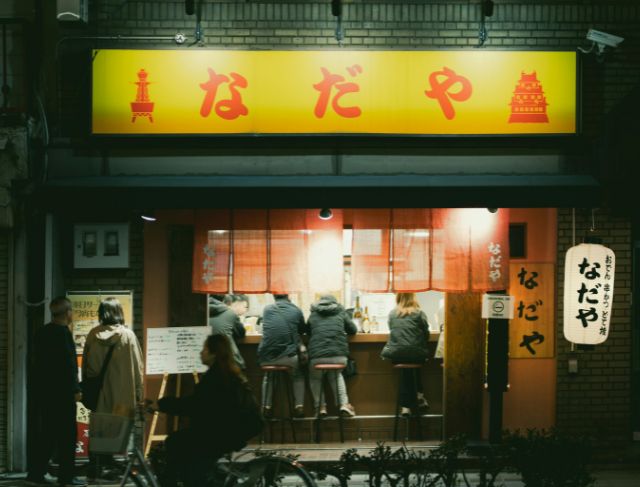

When you visit one of Tokyo’s tiny ramen shops, there will likely be a steaming bowl of freshly prepared ramen right in front of you when you sit down. Don’t forget to sip a spoonful of the broth first before digging in to your ramen. It’s also acceptable in Japan to slurp your noodles, and many Japanese consider this to be a way to let others know that you’re enjoying your meal.
Ramen, overall, is a bit younger than traditional Japanese foods such as sushi or rice-based dishes; most uwa, the general population, believe that ramen has always been part of traditional Japanese culture, and often do not realize that ramen has been in Japan for far less time than many of them think it has.
The Broth
The broth plays the biggest role in ramen. The broth is the base of every other aspect of the ramen experience.
In Tokyo, there are four primary varieties of ramen, which can be classified into two main groups: the two lighter varieties (shio and shoyu) and the two heavier variations (miso and tonkotsu). Miso and tonkotsu tend to have more complexity and richness in flavor compared to shio or shoyu, both of which will tend to be more delicate.
Of the four varieties of ramen, shio is generally the simplest; it is usually made with a light-coloured chicken-based broth that is seasoned with salt. Shio ramen is an excellent choice for an introductory experience because it demonstrates the clarity and subtleness of the ramen experience.
Miso ramen is generally thicker than shio, as it is made using a fermented soybean paste. The fermentation process results in a deeper, richer flavor which adds additional complexity compared to a bowl of shio ramen.
Tonkotsu ramen is easy to identify due to its milky appearance. Tonkotsu is made by boiling pork bones for hours until all the marrow and fat dissolve into the water, creating a silky smooth broth. It is typically very rich, heavy, and extremely satisfying.
Shoyu ramen is darker than the previous two types, as it is based upon soy sauce, but has a strong, savory flavor and may contain a combination of chicken or fish broth and/or seaweed to provide balance and flavor.
If you want to get a full understanding of ramen culture in Tokyo, the best way to do it is to try all four ramen styles. Enjoy!
The Importance of Noodles is Greater Than You Might Think
After the broth comes the noodles, and there are many types of noodles that can be used. Some noodles are thin and straight, while others are thick and wavy; the texture of the noodles can be soft, firm, chewy, or springy.
The unique aspect of ramen noodles is that they’re made with an ingredient called kansui, which is a type of alkaline water that gives ramen noodles their chewy and springy texture. Ramen noodles would be just like pasta if they did not have kansui.
Additionally, many ramen shops will allow customers to choose the firmness of their noodles, thus giving them more options for personalization.
In terms of eating experience, the firmness of the noodles has a huge impact on how the bowl feels.
Toppings: The Wildest Creative Outlet for Chefs
In contrast to other Japanese dishes that follow rigid rules about ingredients and preparation, ramen toppings can be pretty much anything that a chef wants to use; hence, this is where many chefs have the freedom to invent and create new flavors.
The most common topping for ramen is chashu pork, which is a type of pork belly that has been cooked very slowly until it becomes tender and melts in your mouth. Another common topping is soft-boiled eggs, which most chefs will marinate in some type of flavorful liquid to ensure that the yolk remains creamy and rich.
You might also find bamboo shoots, mushrooms, seaweed, scallions, or onions in your ramen bowl as toppings.
In Tokyo, there are no limits to what you can add to ramen; for example, there are shops that serve curry-flavored noodles, use black sesame seeds, and have cheese (or Italian flavours such as pesto and bacon) added to their soup.
All these flavour combos may sound strange but they are actually really delicious; this is part of what makes ramen so great; there are no rules to how you can make it.
With literally thousands of ramen restaurants throughout the city, finding a good ramen shop isn’t all that challenging. There are numerous restaurant review sites, and also people online making suggestions for good places to eat at, but one of the best things you can do would simply be to walk around the area and look for stores that are crowded with people.
If you want consistent quality ramen with a brand name, you can find lots of well-known ramen chains located predominantly in almost every neighbourhood of Tokyo.
The odds of you getting a bowl of bad ramen in Tokyo is very slim.
The majority of ramen shops take a lot of pride in the food they produce.
When you first enter many ramen establishments you will notice a ticket machine similar to those found at some fast food restaurants, and you will not interact with a server until after you place your order through this machine.
To order ramen at a ramen vending machine you will first insert the desired amount of cash into the machine then select your ramen by pressing one of the buttons corresponding to the menu of ramen. You will also find various numbers of buttons on the vending machine where you will select how many toppings, extra noodles, and drinks you want on your ramen. Lastly, you will either press the adult button or the child button according to your size of ramen.
After you complete the transaction, the printed tickets will indicate the number of ramen to be prepared by the staff. The staff will prepare your ramen as you sit down to wait for it to be served to you.
Once your ramen is served to you, you will have hot ramen that can quickly and easily be eaten.
The Experience of Eating Ramen
Eating ramen is much more than just filling your stomach when you go to Tokyo. To eat ramen is to understand the history of ramen, to experience the flavor of the broth, to appreciate the consistency of the noodles, and to be creative with the combination of toppings.
Starting from its Chinese Roots, transitioning through post-war Japan’s to modern-day Japan’s, ramen represents how Japan adapts to outside influences to create something new and different.
When you finally receive your bowl of ramen, the ramen in that bowl represents the combination of all of the above-and-then-some that went into creating that bowl-and-is-the-satisfaction of having a good meal.