
When people think of Jordan, the first thing they usually think of is Petra, but the food definitely rates at just as high a level as Petra does! Warm pita bread and desserts that are dripping in melted cheese and syrup; eating in Jordan is an all day event!
One of the biggest surprises to travelers to Jordan is how social the culture of food is in Jordan. Meals are slow, loud and full of sharing. Nobody hurries through a lunch meal. Even when you think your table has a lot of food, more plates continue to arrive. And when someone tells you to eat more, you somehow actually eat more.
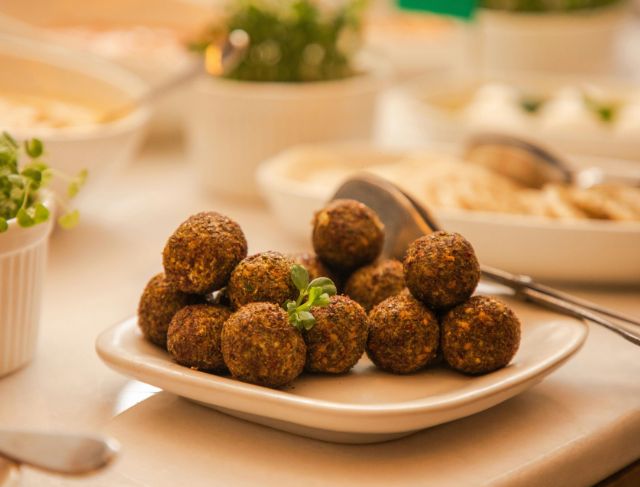
Jordanian breakfasts will ruin your boring hotel breakfasts for good. The average boring hotel breakfast with plain toast and weak coffee will not compare to falafels, creamy hummus, fresh herbs, olive oil, yogurt sauces and fresh hot bread freshly baked, which will comprise your morning meal in Jordan. Even a simple dish will be bigger and richer than you expect. A random street vendor will sell you the best falafel sandwich you will eat on the entire trip to Jordan.
Although people frequently say, “When in Rome, do as the Romans do,” you may discover that bread plays a large part in how Jordanians eat. In Jordan, pita bread acts more like a fork, spoon, and plate than simply an item on the side of your meal. People will tear off a piece of bread to scoop up food with, then put the food into the bread to make a wrap-out-of-it, and dip the wrap-in sauce. If you attempt to use utensils instead, expect polite smiles from the locals and some silent judgmental thoughts.
You will also want to try mana’eesh, the ultimate travel snack. These are flatbreads baked directly on a flat surface or in the oven and usually topped with za’atar or cheese; they can be found almost everywhere, are inexpensive, filling, and incredibly easy to carry. Street bakeries are able to produce simple doughs with great flavor and texture.
When visiting Jordan, you will notice that the lunch culture is very different from what you are used to back home. People in the majority of countries rush through their lunches, often eating in between meetings/ while sitting in front of their computers. However, lunch in Jordan is taken very seriously; families congregate; conversations last an eternity, and the table is filled with more food than anyone could possibly eat. It seems that no one there is in any hurry to finish lunch!
Maqluba is one of the best examples from this style of cooking. “Maqluba” translates to “upside down” so we can already tell it’s going to be exciting! The way maqluba is prepared is to take rice, vegetables, and a protein, put them all into a pot or pan in layers, cook them in one step, and then flip the whole dish onto the plate. If this is done correctly, the entire concoction will land onto the plate in one dramatic motion like an edible skyscraper! Maqluba is also very filling, satisfying, and addictive!
To add another layer to the Jordanian culture of mezze, the smaller plates (called mezze) typically come to the table before the main courses do. The mezze may include things like mutabal, hummus, yogurt dips, olives, pickles, and fried halloumi cheese. Mutabal has a particularly strong flavor because it is made by combining roasted eggplant with tahini, lemon juice, and garlic. This leads to each restaurant having their own unique version of mutabal, with many claiming that theirs is the best.
Similarly, when fried, halloumi cheese becomes very addictive! The salty nature of the addictively delicious product is offset with a sprinkle of sweet pomegranate molasses creating an overall balance of sweet and salty which keeps you coming back for more even after you are full. Jordanian dishes present a similar representation of rich flavor being balanced with tangy sauces, aromatics, or fresh vegetables.
The grilled goods are also an important part of the experience. Wherever you go, you will find chicken skewers, kebabs, and smoky BBQ platters during dinner. The smell wafting from outside grills at night could easily destroy your self-control. And once you add fresh pita bread, garlic sauce, and grilled veggies to the meat, one dinner quickly becomes a two-hour feast.
Jordanian food is memorable not only because it tastes good, but because of how it was made. Meals are warm and shared. Restaurants are lively with conversation, families constantly share plates, and even small local establishments are usually friendly rather than off-putting. There is a feeling around food that it is for sharing, rather than rushing.
After eating so much you may feel like dessert is unfair, but, you won’t be disappointed with kanafeh. Kanafeh is a popular dessert found in Jordan, and rightfully so. The dessert consists of warm, crispy vermicelli pastry layered with melted cheese and drizzled with sweetness. The textures of this dish are so varied; it is at once crunchy, stretchy, creamy and sweet. Watching it being made is as good as eating it.
It’s funny how often that the names of dishes from Jordanian cuisine seem to be fairly simple, even when mentioned out loud. For example, chickpeas, bread, yogurt, grilled meats, rice, and cheese are all very easy words for anyone to understand; there is nothing complex about any of them. When they are put together with various spices and olive oil, with fresh herbs, and with the knowledge from excessive cooking experience, however, the overall outcome can be quite different than what you may have expected.
When traveling through Jordan, you might think you are going there to see ancient ruins and desert scenery, but you will leave having another, and possibly greater, interest than the history and beauty of the landscape – you may find that the highlight of your trip was the falafel sandwich you had from a small local bakery, or the large tray of kanafeh that was shared among a bunch of strangers in the late evening hours.