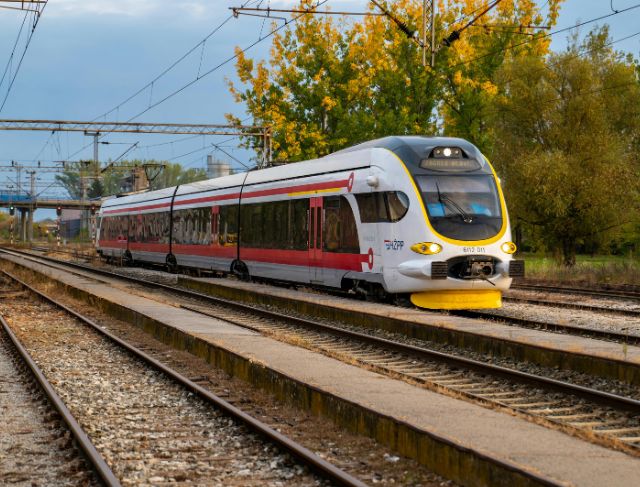

When travelling throughout Europe by train, arranging a voyage through multiple countries within a single day can be considered the norm. For example, start your day off sipping coffee in Paris, enjoy lunch in Brussels and finish up your day watching the sun set in Amsterdam. This scenario is not an extravagant fantasy; rather, it’s an example of what can be done if you plan appropriately.
While Europe has a very interconnected rail system, it’s not just one continuous rail system; rather, Europe’s rail system is a giant puzzle comprised of multiple countries, each of which has its own different rules, different types of trains and different reservation systems. Once you’ve figured out how the entire rail system works, you will find that travelling by rail in Europe is a very easy and convenient way to do so.
One thing you’ll need to consider before booking your tickets is the types of trains that you might be taking. Choosing the wrong train can cost you time and/or money.
If you’re looking for good value and are willing to take your time, regional trains are probably the way to go. Regional trains mainly connect smaller cities and towns within a given country and normally do so by stopping at several locations along the way, moving at a slower pace and charging lower fares. Regional trains are ideal for those who are not on a tight schedule.
In addition to the regional trains, there are also express trains that travel between cities and towns within countries using the same concept except, as the name implies, the express version of a train makes fewer stops and travels faster than its standard counterpart.
Now, there are train systems with fast trains that can go 250 km/h or greater and thus connect two major cities on opposing sides of the ocean. With innovation comes change to the mode of transportation. As high-speed services continue to grow, airlines will face more and more competition, and many times will be at a disadvantage.
There are also international trains that just cross national borders; that is, all train systems that go between countries are international train systems, and could be referred to simply as such.
Europe’s railway system is vast; over 200,000 km (125,000 miles) of railway exists on the continent. However, that’s a lot of railway, and the issue is not necessarily the number of railroads, but that every country operates differently. Each country has its own way of selecting and pricing its ticket system, operating its own rules regarding ticket validation, and in some cases, operating multiple train stations in each city.
Take, for example, Paris. There are several train stations in Paris — not just one main one; the trains at each station serve completely different areas. If you arrive at the wrong train station in Paris, you can be assured of not making it to your destination.
For example, to get from Madrid to Lisbon may appear to be a simple trip on a map; however, you may have to use three different train systems to make the journey.
So basically, check your itinerary (route) at least twice!
Train Trips That Are The Trip
Some trips by rail are a whole different kind of trip; some are an experience.
Luxury trains are top of the line. Hall-of-Fame luxury trains charge anywhere from thousands to tens of thousands of dollars for a single ride. And that’s not even including the famous old-world style, fancy cabins, and leisurely rides on the world’s most famous routes.
The second type of train is mountain, lake, and valley. They generally travel at a much slower speed than regular trains because they are made for sightseeing. Hence, you will see many interesting sights while riding on the train. While you will not be able to see everything when you travel at high speed, you will be guaranteed to see plenty.
Another interesting type of train is the night train. You sleep on the train during the night and wake up in a different city. This can save both time and hotel expenses because you spend less overall time traveling. Night trains have become increasingly popular again, and for good reason.
Traveling by Rail: Choosing A Travel Mode “I’m A Chill Traveler!” Or “I Am ‘A’ Planner.”
For those people who are spontaneous, there is a choice of how to plan a trip. You can just show up to the station, buy your ticket, and hop on the train or bus. Both of these options will work on both regional and local trips. However, for long-distance or high-speed rail trips the tickets will be purchased in advance with reserved seating and no stress in the end (the way to do it).
Both of these methods are legitimate options, it simply matters what type of travel experience is preferable for you.
What is the Eurail Pass?.
If you’re looking to travel through multiple Nations you may have come across the Eurail pass.
Simply put, the Eurail pass is a prepaid travel ticket that allows travelers to access various train routes across Europe and not having to purchase tickets for each trip. This is ideal, right?
In addition, utilizing the Eurail pass allows travelers to take advantage of traveling long distances regularly with flexibility. You also have the option to determine your travel route during your travels, which is fun.
A few things to remember when buying a Eurail pass. A majority of rail line still require you to reserve your seat in order to board the train, and this reservation will incur an additional fee. In addition, there are some rail lines that do not offer travel services under the Eurail pass, and if you’re only making a few trips using the rails could incur less expense if booked separately vs the Eurail pass.
Therefore, you must weigh the cost of purchasing either and compare the two before making your purchase.
Purchasing Train Tickets Three Ways
There are several methods to buy your train tickets.
The easiest method is through a third-party app or website. They are typically user-friendly, as quick as the speed of light, and perfect for travelers who don’t want a hassle dealing with local systems. In addition, you will receive a nominal fee when using an application or 3rd party website, however, most find this minimal charge to be worth it overall.
Booking a rail trip through a national rail company directly may be less expensive. However, the experience may not always be great — some sites have outdated interfaces, translations can be unhelpful, and payments are sometimes unsuccessful.
Purchasing a ticket at the train station offers flexibility. You can buy your ticket just prior to travelling, but line ups may be extremely long for busy periods and there may not be enough space available on the train (they can sell out).
There’s One Additional Step That Many People Do Not Consider
You have your rail ticket and are ready to travel — simple, right?
In some countries, before boarding, you must validate your rail ticket. You can do this by inserting your rail ticket into a validating machine so that it receives a stamp with the date noted on it.
If you do not validate your rail ticket you can be fined, even though you have already purchased a rail ticket.
Most electronic tickets do not require validation of your rail ticket, but check as there are different rules depending on the area of passage.
Why Trains Are Better than Planes (Except for a Few Situations)
For many occasions, trains are more convenient than flights in Europe.
Trains and airplanes go from city centre to city centre; they do not require excessive amounts of security checking (lines); there are no excess baggage fees on trains and there is better scenery traveling by train as compared to airplane travel.
Additionally, you genuinely enjoy the journey rather than merely tolerating it.
European train travel is not complicated; it simply appears so initially.
Once you know the varieties of trains and how to reserve seats and also how to operate the various aspects of a train station and validate your ticket, everything becomes apparent.
The thought of making numerous connections when travelling between multiple countries during one vacation will no longer appear daunting.
So whether you want to plan everything right down to the minutia or prefer to go with the flow, the European railways give you the freedom to experience your trip in exactly the way you desire.
That is why it is so great!