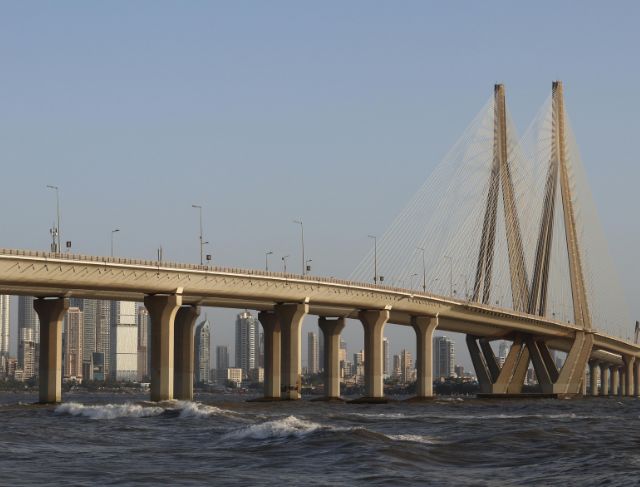

Before modern-day Mumbai developed an impressively large traffic flow of transportation methods, tall buildings, crowded trains and billion-dollar companies, it was merely a series of islands that formed an archipelago off of India’s western coastline. The vast differences between the way Mumbai exists now compared to years ago are what makes this Asian metropolis a fascinating place to visit today. Even though the skyline is busy, the urban area was created via a long series of political upheaval, colonisation, the use of experimental engineering techniques, and the displacement of millions of people whose land was changed completely; therefore, transforming the physical boundaries of what we see today into an urban metropolis over a long time period.
There is something amazing about Mumbai in that the people living here today have a very different picture of the way this city was made today than what existed over 100 years ago. The original land of Mumbai consisted of seven islands that were separated by marshland, creeks, and extremely rugged coastlines. It was not until a series of landfills were created, road works completed, and extreme growth occurred that Mumbai produced enough land to create a single unit of a city. Mumbai is literally a city completed by man through numerous engineering projects that have linked different pieces.
Before skyscrapers eclipsed the skyline of Mumbai, there existed on these islands a fishing community called the Koli that survived through generational means before the arrival of Europeans in the area. The Koli’s relationship with the ocean grew to define the culture long before Europeans arrived. Europe or other countries that established colonies on the islands.
When the Portuguese traders first came to the islands during the 15th century, they recognized the natural conditions of the bay and started to establish control over the area. The Portuguese referred to the bay of Mumbai as “Bon Bahia” (good bay), which was transformed into the word Bombay. Mumbai/Bombay originally existed as a trading outpost, and eventually became strategically important for shipping between Europe, the Middle East and Asia.
As for how the islands came to be a part of the British Empire, this is also quite an unusual story. The United Kingdom had previously agreed to cede these islands to the British Crown through a royal marriage settlement ( Philadelphia agreement^†1 ). The British later eventually leased the islands and handed them over to the East India Company at what would have appeared to have been an outrageous price at that time. At that point in time no one would have been able to have foreseen what the future economic power of Mumbai would be. What began then as a remote colonial trading station has now evolved into the financial hub or heart of India.
Quickly, the East India Company realised the potential (additional value) in this area. The natural harbour afforded ships access and ease of travel/transport between continents, and the rapidly expanding Trade Network made Bombay increasingly valuable as a trade and commerce centre.
To assist with addressing the flood problem, Governor William Hornby took it upon himself to provide additional connections (via the building of embankments and roadway infrastructure) between the islands.
What is quite possibly the funniest part of this historical story is that Hornby initiated the building of the connections (embankments/roadways) prior to having formal approval from the government of the UK. By the time the government of the UK disallowed the building of the embankments/roadways, they had already been completed and the physical improvement remained in the city of Bombay, but the improvement caused Hornby to lose his job. As such, this is often cited as the first Significant/large scale Illegal construction project in history.
When the Suez Canal was opened, the shipping patterns between Europe and Asia changed drastically and made Bombay a key point for international business. Merchants, workers, industrial workers, and migrants to Bombay searched for jobs with good pay. Cotton mill operations expanded very quickly, banks and other types of financial institutions were developed, and entire neighbourhoods were formed around trade and manufacturing.
South Bombay (often referred to as “SoBo” today) retains much of its colonial history. When you walk through South Bombay, you will experience many different eras at once; for example, there are many huge neo-Gothic building and the Art Deco apartment buildings. You will also find many very busy markets a short distance from large hotels and offices that are catered primarily toward international businesses. This area has many layers of history, not just one type of architecture.
This railway station was built during British colonial rule and is an example of how British Colonial architecture combined with Indian architectural features, making it one of the most famous railway stations in the world. It was not only a beautiful building, but it also represents the rise of railway transportation, which connected Mumbai to the rest of India and provided the foundation for massive economic development.
The Gateway of India, an iconic landmark built in honour of a British royal visit, is now a reminder of the departure of British troops from India after independence. Today, it functions as an active tourist attraction, as well as being the starting point for many tourists taking ferries to Elephanta Island.
The coastline tells a different story. Much of modern Mumbai has been created by reclaiming land from the sea over many years. Many places that are now busy streets, housing estates and business districts were once underwater. Marine Drive has been referred to as the ‘Queen’s Necklace’ due to the way it sparkles at night; it represents both the engineering excellence of the day and Mumbai’s desire to make the most of each inch of land.
The architectural identity of Mumbai also changed significantly during the first half of the twentieth century. In previous decades, British colonial buildings formed the majority of the architecture in the older areas of the city; however, Indian architects began to use Art Deco design extensively in reclaimed coastal areas, resulting in one of the largest collections of Art Deco buildings anywhere in the world outside of Miami. Consequently, Mumbai is now home to many decorative balconies, curved facades and geometric detail that sit alongside both Gothic-style and modern glass skyscrapers.
There are plenty of people who live in Mumbai. There are many parts of Mumbai that have not been developed yet.
Industrialization brought millions of people to the city, as they migrated from all over India and looked for jobs in factories and ports. There is no way for developers to keep pace with the need for housing; thus, many people found their way into large informal settlements (like Dharavi) after most of the land was taken by developers. Over time, these communities became complicated and complex.
The way that people travel within Mumbai is one of the defining experiences of life in the city. With millions of people travelling throughout the city every day using the suburban railway system, it acts as the city’s main functional centre. Each day, the local trains are packed full of commuters, chaotic, and exhausting; but they are all also incredibly efficient. Life in Mumbai would be impossible without the use of local trains.
Above ground, the streets of Mumbai have their own rhythm. Yellow taxis fly through traffic while buses squeeze through congested streets. Pedestrians somehow find their way across streets, even at intersections where it appears impossible. While Mumbai has a loud, congested, chaotic feel to it, the constant pace and activity of the city defines the city itself.
One of the most remarkable elements of Mumbai is its multitude of distinct worlds comprising a single city. Towering luxury condo buildings rise over fishing villages. Historic colonial areas sit side by side with modern-day commercial centers. Major religious sites, Bollywood, major financial institutions, and markets all exist in the same urban environment. In very few cities will you experience this many diverse cultures cohabiting at such an overwhelming pace.
Mumbai was not established around one king, one great monument, or one significant historical event. Instead, its development stemmed from centuries of development and growth driven by immigration, trade, innovation, politics, and endurance. Every addition to the coast through land reclamation, the construction of every railway station, every volume of pedestrian traffic in every busy market, and the creation of any historic district is a part of this overall narrative. This is the reason Mumbai’s growth is always dynamic and that it is constantly renewing itself while retaining strong ties to historically significant periods.