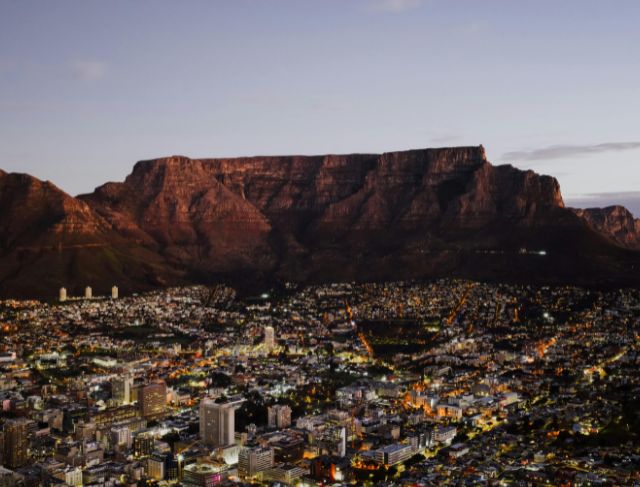

A lot of tourists experience Table Mountain from a distance by taking pictures from the beach, observing it from restaurants, or the fact that it’s the most significant feature in the Cape Town skyline (in terms of size). And then they leave Cape Town and the mountain behind.
In comparison, those who live in Cape Town know that the mountain is not meant to be experienced from a distance; it is meant to be climbed.
When you reach the summit, you begin to understand Cape Town as a whole; you can see the city, the coastline, the Atlantic Ocean, and all leftover mountain peaks in a single and awe-inspiring view that stretches for miles.
But reaching the summit is just part of having a great time at Table Mountain.
Table Mountain is not just a peak; it is a huge mountain range, and although there is one flat-topped peak from one area of view, there is actually a much larger mountain range that consists of valleys, waterfalls, cliffs, forests, and houses hundreds of hidden lookout points.
Many tourists find it very surprising to learn that there isn’t just one trail to the summit of Table Mountain; there are many trails to the summit of Table Mountain.
New hikers to Cape Town have access to many different paths on which to start off with lion’s head being one of the best first timers routes. Even though it is not part of table mountain, it is viewed by many as the best value for money in terms of an ascent anywhere in South Africa.
As a rule, the ascent to lion’s head can be accomplished by most people in about 90 minutes and the rewards to hikers who achieve the top are absolutely magnificent views of the city, the ocean and the panoramic view of the surrounding mountain ranges (360 degrees).
Many of the local residents even climb lion’s head prior to going to work.
The magical sight of the line of headlamps winding down the trail on the nights of a full moon create a spectacular effect from afar.
If you decide you want to take the more traditional route up to the top of table mountain via Platteklip, you are going to know what you are getting yourself into prior to starting.
From the base of this trail you know exactly what you are going to get because the trail goes straight up.
This trail, for all intensive purposes, is nothing more than a huge stone staircase on the northern face of the mountain. It is definitely hard on your legs and knees but, it probably has to be one of the easiest/convenient ways to get to the top.
India Venster is the route for you if you’re seeking an adventure!
Alongside some hiking, there will be sections requiring you to scramble across rocks and use ladders; there are multiple areas where you will have little to no support if you lose your footing, making it more challenging than the Platteklip Gorge. However, the unique scenery and changing views throughout your hike create an unforgettable experience on the mountain!
Many long-time hikers call this one of the classic hikes in Cape Town.
Another feature of Table Mountain is that each side of the mountain has a distinct environment from one another.
The eastern slopes are so unique that they seem to create their own world.
They contain many trees where large amounts of forest cover the ground, creating a cool shaded area beneath your feet. There is also a mix of native trees as well as the pine trees that were planted there during the colonial period.
There are several well-known hiking trails starting on the eastern slope, including Skeleton Gorge and Nursery Ravine.
Skeleton Gorge is the better choice if you are an experienced hiker looking for a real adventure! There are parts that will require some scrambling—as well as very cautious use of your feet—but the lush surroundings are lush and well worth it.
Nursery Ravine offers hikers a less challenging hike, but you will still feel the forest atmosphere.
Now onto the western side of Table Mountain.
The western side of Table Mountain faces the Atlantic Ocean and is home to the most breathtaking views of all the climbing in South Africa. The cliffs are steep and rugged, while the coastal ravines look stunning, and they create some of the best views of the coastline in all of South Africa.
Many of the hiking paths mentioned above can be accessed through the famous Pipe Track.
Unlike other steep areas on Table Mountain, the Pipe Track has a more gradual incline, so it offers hikers the opportunity to enjoy amazing scenery without having to endure a difficult climb to get there.
In addition to presenting amazing views of the city at sunset, this track is one of Cape Town’s most popular sunset hikes.
Moving further east up the mountain, some of the more challenging hiking paths are Kasteelspoort, Corridor Ravine, and Diagonal Path.
Of these routes, Kasteelspoort is perhaps the most popular among all forms of outdoor activities.
Not only does this trail follow part of one of the original, historic routes used to construct water supply infrastructure along the mountain, but it also has some of the best ocean views imaginable.
One of the most photographed features of the trail is a large rock formation known as the diving board, which is so named because of its height and position above the surrounding landscape.
Reaching the summit, however, is not the only highlight of the journey to the top of Table Mountain.
Many hikers are totally unprepared for how much there is to experience when they reach the top of the mountain.
There are different types of viewpoints, trails, reservoirs, picnic areas, and even overnight lodging available for those seeking a unique experience on top of Table Mountain.
While some people may spend more time wandering around the plateau than walking up it.
Across portions of the mountain, there are also some protected natural locations with limited access, implemented with the goal of maintaining these rare ecosystems.
Some of the sections of the mountain require permits, and they will only allow 30 people to hike through the particular protected area on any given day.
The restrictions in place are intended to prevent harm to the areas and to ensure that future generations will experience the same species diversity of these locations as we do today.
Regardless of the direction you decide to take to prepare, you need to be prepared.
Even though Table Mountain is located right next to a large city, it is a true wilderness area.
Weather conditions can change very quickly, so hikers should expect to be surprised by high winds, fog, and sudden temperature drops during their hike.
It is suggested that you always carry a sufficient supply of water, sunscreen, layers of clothing, and a headlamp.
In addition, hikers should only hike on marked trails and always hike with another person for their own safety.
Each year, rescue personnel provide help to people who hike because they underestimated how tough Table Mountain would be.
Overall though, the large majority of incidents are preventable with proper planning.
On the outside, Table Mountain appears to be just one large landmark to see when traveling to Cape Town.
In reality though, it is an entire region with many opportunities to explore!
Every peak, valley, forest, and ridge has an entirely different view of the city of Cape Town.
Whether you want sunrise views or humongous waterfalls; whether you prefer a difficult scramble or want to relax while enjoying a picnic overlooking the Atlantic, there is a hiking trail for everyone.
After standing at the top of Table Mountain looking down into Cape Town, you will see how so many people think it is one of the world’s most beautiful urban peaks.