
The difference will be tremendous; you will view things differently after being exposed to the different species or topographical features, but there is also something fundamentally different when you are at home and being able to move freely.
You can hear the sounds of the wild and feel as if you are part of their home.
You will have to consider where to go next as you will have many different options available, making it ever so complicated to choose from the many dozens available to you. Does each feature have its own unique qualities?
The regions that are constantly being mentioned by others include East Africa and Southern Africa, with many of them having no shortage of ‘variety’.
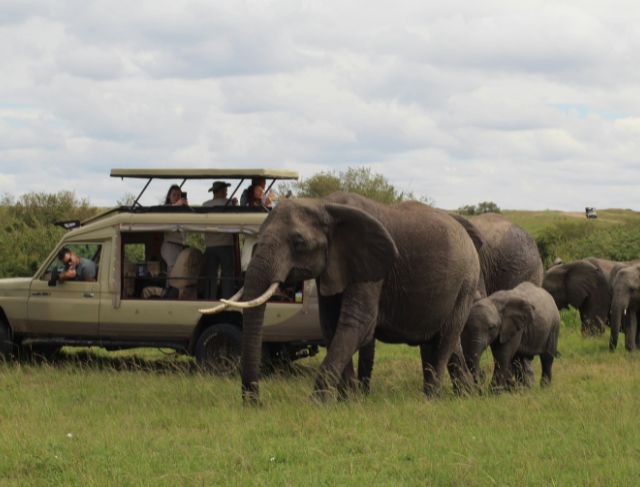
A safari is many different types of adventures. For example some days are observed on open savannah where elephants freely roam and on other days are spent on a beach with crystal clear blue water.
There is so much beauty available to enjoy in Africa like that of the Ngorongoro Crater in Tanzania.
Tanzania is like an album featuring some of the best landscapes around the world. You have the Serengeti where one of the largest migrations of animals in the world occurs annually as they migrate from one location to another between Africa and North America. They never stop moving for long – these animals are always traveling, they are always changing directions, and they’re never on a specific schedule.
And there is the Ngorongoro Crater which resembles a large animal sanctuary; this is also a location where you can expect to see animals because there are so many animals in such a small area.
Then you have Mount Kilimanjaro (also located in Tanzania). Kilimanjaro is tall and very quiet in comparison to both the Serengeti and the Ngorongoro Crater.
When you are done with Kilimanjaro you will have an opportunity to relax in Zanzibar when the pace of life will slow down while being surrounded by the ocean.
Travelling just a little further north will take you into Kenya, which many people consider as the original safari location; the Maasai Mara has become quite famous for the animals that migrate from Tanzania into the Maasai Mara during the animal migration; the excitement of witnessing this migration is like no other experience. The migration is full of drama, chaos, and at times terrible like how nature does not “sugarcoat” things.
If you want something a little closer to the capital but still an amazing safari experience, then Amboseli National Park should be on your short list. Amboseli is also known for its massive elephants and iconic postcard-like views of Kilimanjaro looming in the distance.
Also in the North, is Samburu. A less populated area, rugged, and home to many unique species that are not easily found anywhere else. Samburu also offers visitors a unique opportunity to learn about local tribes that have maintained their ties to the land.
This time we are going down to Southern Africa to experience a different type of safari.
Typically, South Africa serves as the starting point for most safaris in Southern Africa due to its accessibility, variety, and flexible options available for all types of budgets and travel styles. You can very easily get from one of South Africa’s major cities such as Cape Town into the great outdoors with virtually no interruption.
Kruger National Park is certainly the most popular destination in South Africa with regards to wildlife. The park is enormous, has thousands of animals and the opportunity to drive through the park on your own in some areas — an option not available in many countries.
Combine driving through Kruger with a few days of travelling along the famous Garden Route and now you’ve added everything from stunning coastlines to scenic forests and charming little towns along the way.
Namibia is the type of dreamlike escape that takes you to a whole new world. It’s isolated, extremely quiet, and filled with desert-like scenery consisting of towering dunes, endless horizons, and various wildlife that thrives against all odds in an arid environment.
Etosha National Park is the premier safari destination to visit. The experience is unlike that of the incredibly lush savannahs found throughout Eastern Africa; its dry and bare landscape is, at times, downright oppressive. However, this is part of Etosha’s charm.
Botswana’s topography contains vast areas of water and wilderness. An example of this is the Okavango Delta—one of the most remarkable ecosystems on earth; when the rains come, the previously barren land is transformed into a huge labyrinth of waterways and islands.
In addition to exploring the Delta by land, visitors also have the chance to use traditional wooden canoes to explore the area’s wildlife via these waterways. This allows visitors to observe animals using an entirely different perspective.
Chobe National Park is another great place to explore if you’re fond of elephants; there are plenty of them—and they are huge!
And finally, there’s Zimbabwe—an unfortunate but often overlooked destination when discussing travel in southern Africa. However, Victoria Falls alone is worth a journey to this country! Victoria Falls is loud, also powerful, and cannot be ignored!
Hwange National Park (classic safari) and Mana Pools (primitive safari) are both located near the Zambezi River.
Somewhere in between is the question of what type of safari experience do you want to have?
Are you seeking a luxurious lodge with a private tour guide or an independent self-drive safari that allows you to pick your own pace?
Are your safari preferences animal driven or landscape driven?
What you will not hear many of the guides talking about is that a safari is not just checking animals off your list.
The thrill of seeing lions or elephants is incredible, but often the best memories are the smaller things, e.g. the changing light on the landscape or just the sound of wind blowing and the calls of animals in the distance.
These elements slow you down in a way that can’t be explained until you’ve experienced it yourself.
So, when you go home, you may have taken some photos or will have some stories, but you will also have gained a new perspective on how you fit into the grand scheme of life.
Ultimately, this experience will be what sticks with you the most.