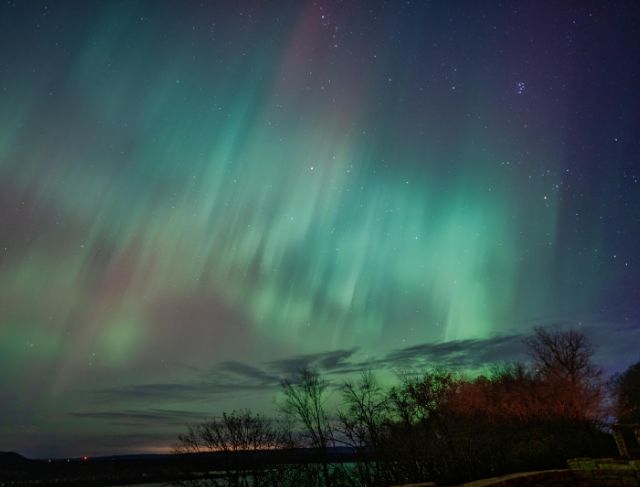

You may depart without observing them, yet still regard the occasion as being one of your finest adventures. ‘Chasing the Northern Lights’ has an odd sorcery about it; even while the sky remains dark throughout your pursuit, that quest feels like a reward. When the aurora finally materializes? Incredibly, it is as though the sky suddenly can be seen being performed upon just for you.
Most individuals start to ask where to go; however, where you go isn’t usually the most difficult aspect of determining your trip. The major obstacle is timing, perseverance and a bit of luck. You may be in one of the most favorable locations on the planet and still see nothing. Meanwhile, within a short distance away there may be another individual watching green strands of light dance above them.
Now, before we get into the scientific method or the art of the hunt, think of this: You are somewhere deep within northern Norway perhaps on Lofoten Island, it’s somewhat cold outside, and you are gazing at an utterly dark sky. Time passes by as if nothing will ever happen, when in a flash you see a small green glimmer. At first glance it appears to be a puff of cloud but then it starts to move, and later to have a rhythmic movement of its own
At times, the Sun will expel great amounts of electrified particles known as coronal mass ejections (CMEs) into space; these ejected CMEs can travel through space and sometimes directly toward the Earth where they will interact with the Earth’s magnetic fields which provide a form of protective barrier. Some of these charged particles will pass through the barrier at the poles and collide with the gases that comprise the Earth’s atmosphere where energy is released as visible light; that light is referred to as the aurora. So while you might look up at an aurora and think about how serene it looks in the night sky, it is in fact a result of a very violent high energy collision that has occurred above your head.
Auroras do not randomly occur over all areas in the world; there is a predominant area called the aurora belt where auroras will most frequently occur. While auroras occurring in the north tend to receive more visibility than those that occur to the south, auroras do in fact occur in areas such as southern New Zealand and Tasmania due to energetic collisions creating brilliant displays of light in the night sky above those regions, although they tend to be less frequently visible than auroras to the north.
You’ll need dark—really dark!—when you’re hunting for a specific time of year and place to view auroras. September through March offers the best chances for viewing auroras in northern latitudes because of this darkness; if you’re in places like northern Norway during the summer, you have no chance whatsoever as there simply won’t be any darkness.
Clouds can also ruin your chances of getting to see an aurora, but not all clouds are created equal. The worst are thick mid-level clouds where you can’t see anything. Low clouds can often blow away quickly in the wind, so every so often you get lucky with low clouds; while high clouds tend to be thin enough to allow some light through, they won’t necessarily block out all the stars and/or the auroras.
As a result, it is essential that you adopt keeping an eye on the aurora weather forecast as part of your daily routine!
Perhaps surprisingly, the aurora forecast itself is generally less accurate than expected. For example, predicting the weather tomorrow always has some certainty that at least some level of rain will occur; however, predicting when auroras will occur is much less precise. The most important factors when forecasting auroras include density and velocity of the solar wind and how those factors interact with the Earth’s magnetosphere.
Certain travelers prefer to go with tour companies but this isn’t a bad choice. Local guides will know where the tour should take place, they know what the weather forecast shows as well as when it may not be the most ideal. Those who choose to go solo typically have a car and some sort of resources to help them but they have a lot of luck on their side.
Both of these methods work but they will be outside, freezing at some time.
The auroras may not be as bright as those images you’re used to seeing online and they may also not be as dramatic to your eyesight. Some might be very faint, some may appear to be almost ghost-like.
Some of these may even be very animated – moving, twisting, developing several shades of color. Just about 9 out of 10 auroras will be green; however there are also red and purple auroras when the conditions allow for this to occur.
The reality is at that moment, you are observing something that began thousands of miles from Earth (on the surface of the sun) before showing up in your view.
Another interesting point is that auroras occur on other planets as well, including Saturn and Jupiter however, the visible spectrums of light do not exist on those planets and generally can’t be seen/witnessed via naked eye.
As you go through the chase of finding an aurora in the night sky, you eventually come to a conclusion.
Experiencing the Northern Lights isn’t just luck; it’s about being there at the right time, letting the universe work, and having the faith to let the universe surprise you. So don’t be disappointed if, when you’re finally viewing the Lights, the greatest experience you have may not be the Lights but all of the events leading up to those Lights.