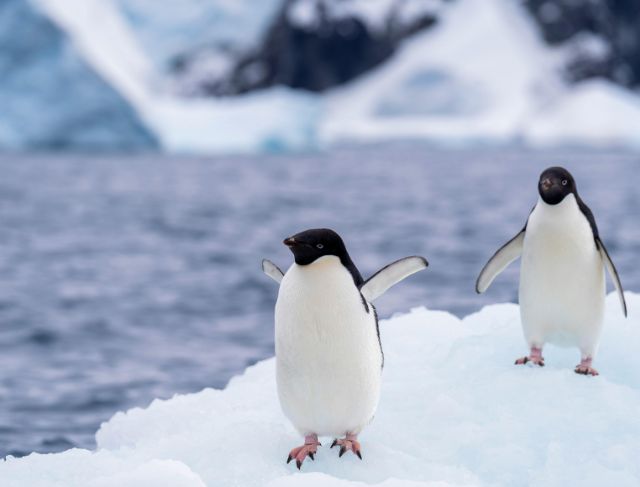

The extinction of African penguins from the wild could happen within the next few decades if current trends continue without change. And it won’t happen slowly, or eventually; there is a real chance that future generations will know of African penguins only from pictures, videos or through zoos. But here’s the twist: unlike many animals that suffer cast systems of extinction (like the Dodo) this is happening right now.
On the coast of South Africa, penguins are practicing standing still on land – they don’t move at all – so it looks like they are standing in front of a colony of penguins. The lifelike penguin decoys are being used as part of a desperate attempt by researchers to trick real penguins into believing they belong to a larger colony so they will create nests and reproduce in hopes of surviving.
It’s insane that researchers would even have to create a fake colony in order to give African penguins a sense of safety enough to return to their original habitat.
Crystal-clear beaches, incredible cuisine, and a well-known extinct species—the dodo—are just a few of the reasons for vacationing in Mauritius. You may have already seen this iconic bird on many different types of products, from souvenirs to logos to rum bottles.
The dodo wasn’t simply slow or dumb; it became extinct due to the arrival of humans. There were no natural predators, no predators for them to avoid, nor any survival strategies that they possessed until all of a sudden, there were.
As we witness history repeating itself elsewhere in the world, the African penguin and their population may seem like an outlier in this situation. They had an abundant population, a century ago, comprising hundreds of thousands of penguin colonies on the islands surrounding Africa’s southern coast.
Today? Their population has plummeted to nearly none. It’s not a natural decline but one that occurred over the last 100 years.
You might believe that the lack of food and oil spills or predators have contributed to the penguins’ extinction, and that would be partially correct; however, fish is the primary contributor to this decline.
The African penguins’ survival depends on their ability to catch sardines. A lack of sardines equals no food. No food means less able to raise their offspring, leaving fewer adult penguins each year. It’s this simple!
Now add in overfishing, changing ocean currents and climate change; to the AFRICAN penguins; their main food source is becoming increasingly sparse.
Penguins do not just migrate. They stay at their nesting sites year after year, and so when the feeding grounds change regionally, the penguins cannot move to new places where there is food available.
Human impact on all species of penguins occurred over many years, and continues to this day.
Historically, we have impacted (-or affected-) penguins:
(1) by harvesting them for food;
(2) through harvesting their eggs by the millions;
(3) through the destruction of their nesting sites to create fertilizer;
(4) through oil spills that result in oil on their feathers—making it almost impossible for them to survive;
(5) by removing from the oceans many of the fish (their food source).
Human efforts have kept the penguins from going extinct, therefore ironically we are also the reason that they still exist.
Thousands of people have worked in rescue organizations, conservation organizations, and as volunteers to clean, feed, protect and rehabilitate the penguins.
To many visitors the view of the penguins at places like Boulders Beach near Cape Town appears to be a picture postcard: many penguins everywhere, tourist taking souvenir pictures of the penguins, with calm blue water as a backdrop.
However, the overwhelming reality is that the view of penguins at Boulders Beach is more like a refugee camp than it is a natural habitat.
The only reason that many of the penguins are at Boulders is because of the lack of better options.
It takes time for animals and humans alike to develop new reproductive areas. Reproductive areas for penguins will contain no predators, have abundant food sources for them to eat, and be situated away from previous nesting sites so they can avoid any problems.
As we attempt to prevent the extinction of African penguins, an annual increase in the overfishing of fish that many birds rely upon as a food source and also negative environmental changes could certainly lead to their demise.
The answers to these questions depend on how we manage our fisheries, which protection measures we choose to support, and what actions governments take to lessen environmental impact.
These challenges seem insurmountable at present, but they will not disappear overnight; if anything is going to succeed, someone has got to care enough to make the right choices and do what needs to be done.
While the dodo bird may be viewed as a historic metaphor for the dangers associated with humans, there are individuals today who care deeply about the survival of the African penguin and are committed to changing its fate.
We are at a crossroads; either we succeed in saving the African penguin or they will follow in the footsteps of the dodo.